

Synthetic Gene Circuits Market Size, Share, and Trends 2026 to 2035
 Status Published
 Category Healthcare


Content
Synthetic Gene Circuits Market Size, Growth and Trends 2026 to 2035
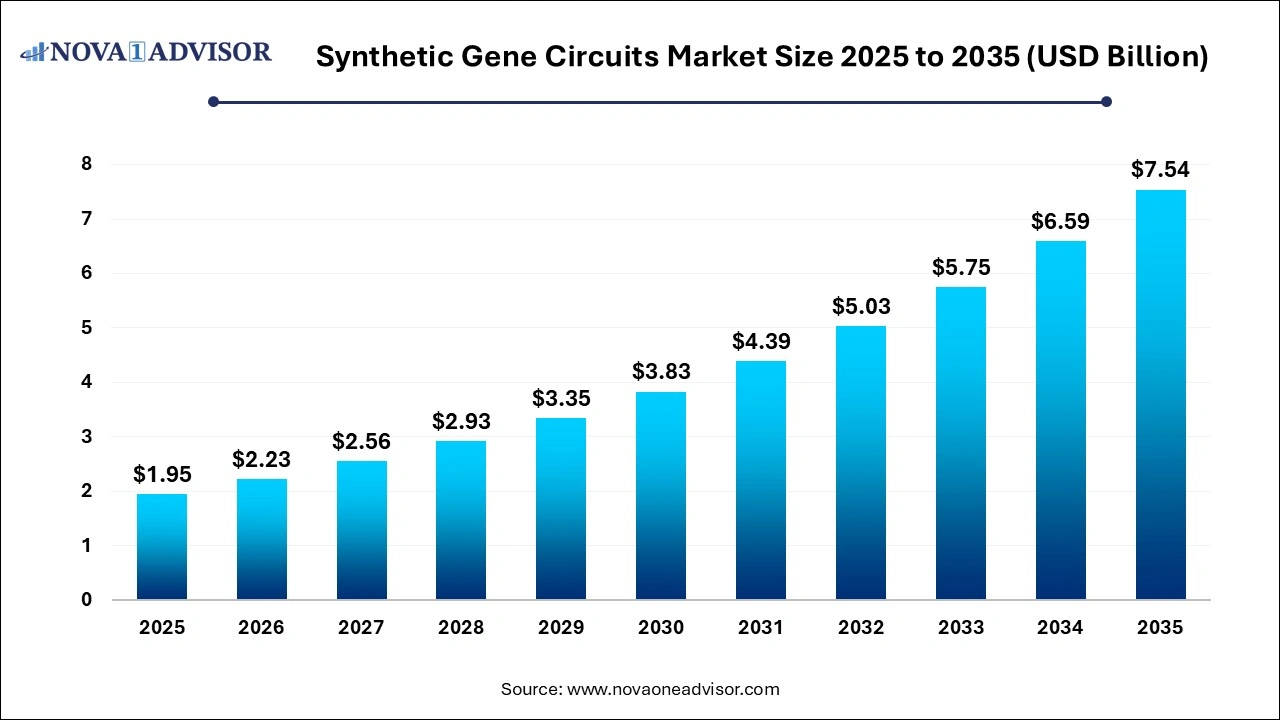
The global synthetic gene circuits market was estimated at USD 1.95 billion in 2025 and is projected to reach USD 7.54 billion by 2035, growing at a CAGR of 10.48% over the forecast period 2026-2035. Market growth is driven by advancement in the engineering of custom cells for targeted therapies, such as cancer immunotherapy, improving selectivity and reducing exhaustion, gene circuits are increasingly used to create complex cell-based assays, improving speed of drug hit trudge and evaluating therapeutic effects in organoids, and the rising high levels of funding for synthetic biology, particularly in Asia Pacific region are fostering rapid innovation.
Synthetic Gene Circuits Market Key Takeaways
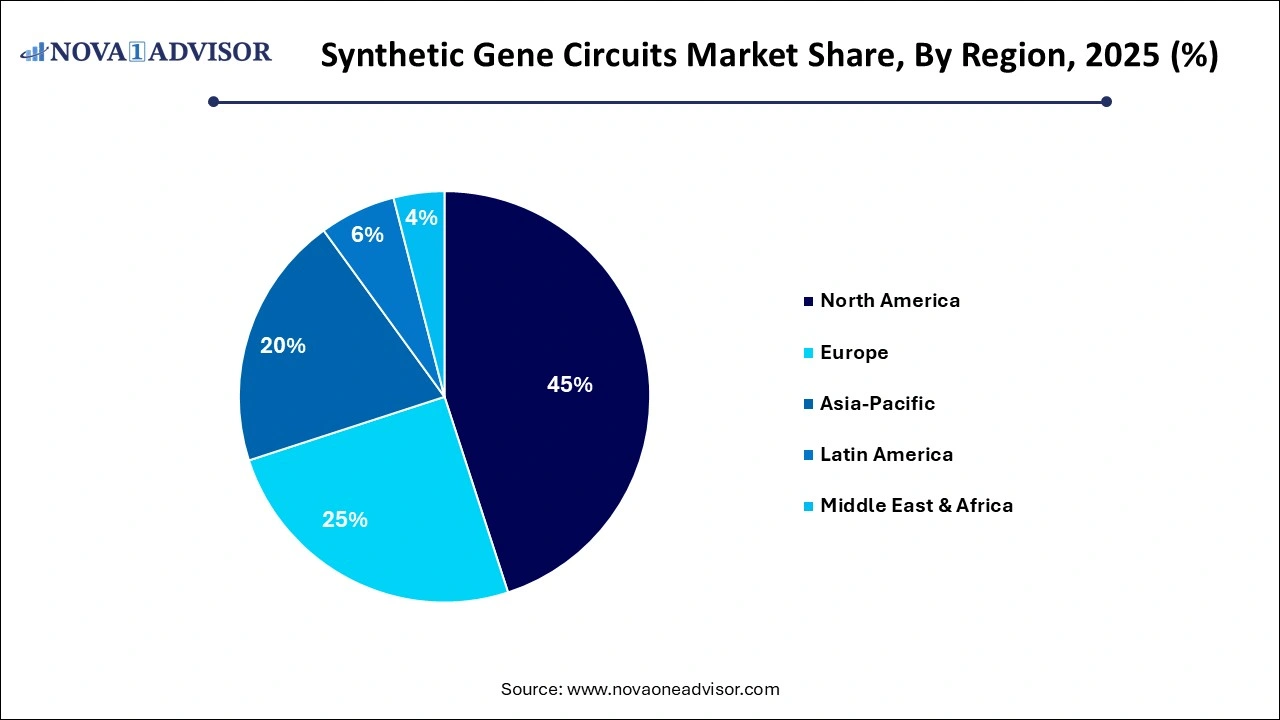
- By region, North America held the largest share of the synthetic gene circuits market in 2025.
- By region, Asia Pacific is expected to experience the fastest growth between 2026 and 2035.
- By product, the circuit-specific synthetic regulatory elements segment led the market in 2025.
- By product, the memory & signal processing circuits segment is expected to expand at the highest CAGR over the projected timeframe.
- By application, the research segment led the market in 2025.
- By application, the therapeutic segment is the fastest growing in the synthetic gene circuits market.
- By end user, the academic research institute segment dominated the synthetic gene circuits market in 2025.
Artificial Intelligence The Next Growth Catalyst in Synthetic Gene Circuits
AI and ML are transforming the synthetic gene circuits industry by accelerating the design-build-test-team cycle, reducing development times from years to weeks, and significantly lowering costs. By leveraging machine learning models, researchers can simulate circuit behavior to predict protein expression levels, metabolic burdens, and failure points in silico before laboratory synthesis. Generative AI and deep learning are used to optimize metabolic pathways, design novel genetic modules, such as promoters or toehold switches, and automate laboratory robotic systems, enhancing precision in circuit engineering. This convergence of technology is enabling the creation of more sophisticated, context-aware biological systems, driving growth particularly in the development of customized therapeutics and personalized medicines.
Strategic Overview of the Global Synthetic Gene Circuits Industry
The synthetic gene circuits market involves engineering artificial genetic regulatory networks to reprogram cellular behavior and enable predictable functions. These circuits provide significant advantages, including enhanced biosensing capabilities for real-time monitoring of disease biomarkers and toxins, and the ability to enable safer, more targeted personalized CAR-T cell Therapy. Key applications span across therapeutic design for cancer treatments, industrial biomanufacturing of chemicals and biofuels, and the development of crops that can withstand environmental stress. The increasing consumer health awareness, the rising elderly population, and significant technological advancements in gene editing and CRISPR tools.
Synthetic Gene Circuits Market Outlook
- Market Growth Overview: The synthetic gene circuits market is expected to grow significantly between 2025 and 2034, driven by the rapid innovation in DNA sequencing, gene synthesis, and tools, such as CRISPR-Cas9 allows researcher to modify microorganism with high precision and lower costs, expanding the application of gene circuits in drug discovery, personalized medicine biosensing, and diagnostics, and significant investment from public and private sectors in synthetic biology research, particularly for developing synthetic therapeutics and renewable energy solutions, are accelerating market growth.
- Sustainability Trends: Sustainability trends are green biomanufacturing and microbial factories are being deployed to control metabolic pathways in micro microbes, enabling the efficiency production of biofuels and high-value biochemicals from renewable feedstocks, rather than fossil fuels, eco-friendly agricultural solutions are increasingly used in crops to improve nutrition use efficiency, enhance resistance to biotic stress, and reduce reliance on chemical fertilizers and pesticides, and advanced environmental remediation.
- Major Investors: Major investors in the market include Ginkgo Bioworks, Twist Bioscience, GenScript Biotech, Precigen, Sangamo Therapeutics, Synthego, and Merck KGaA. These drive massive investments enable advances in gene-editing tools and AI-assisted design, reducing costs and accelerating development cycles. Expanding application reach the translation of synthetic circuits from laboratories to commercial applications, particularly in high-growth areas, such as personalized gene therapies, diagnostics, and agricultural biomanufacturing.
- Startup Economy: The startup economy in the market consists of agile, innovation-driven biotech firms, such as Synthego, Senti Bio, and Mammoth Biosciences, specializing in customized gene editing tools, circuit design, and programmable therapeutics. These startups drive market growth by offering customizable, cost-effective solutions for metabolic engineering and cell therapy, enabling precise cellular manipulation for therapeutic and industrial use. They fuel rapid innovation by leveraging digital bio-design, automation, and bioinformatics to shorten design-build-test-learn cycles.
Synthetic Gene Circuits Market Report Scope
| Report Coverage | Details |
| Market Size in 2026 | USD 2.23 Billion |
| Market Size by 2035 | USD 7.54 Billion |
| Growth Rate From 2026 to 2035 | CAGR of 10.48% |
| Base Year | 2025 |
| Forecast Period | 2026 to 2035 |
| Market Analysis (Terms Used) | Value (USD Million/Billion) or (Volume/Units) |
| Segments Covered | By Product, By Application, By End Use |
| Regional Scope | North America; Europe; Asia Pacific; Central and South America; the Middle East and Africa |
| Key Companies Profiled | Ginkgo Bioworks, Twist Bioscience, GenScript Biotech, Precigen, Sangamo Therapeutics |
Synthetic Gene Circuits Market Dynamics
Drivers
Advancements in Gene Editing and DNA Synthesis
The high-friendly, low-cost DNA synthesis allows researchers to quickly create, test, and iterate complex, custom genetic sequences that form the building blocks of synthetic circuits. Simultaneously, precise gene-editing tools, such as base and prime editing, enable the seamless integration of these synthetic circuits into host organisms with minimal unintended modifications. These technologies have accelerated the development of sophisticated applications, such as engineered CAR T-cells for cancer therapies and biosensors for diagnostics, by enabling in vivo, user-defined control over gene expression.
Rising Demand for Personalized Medicines
The synthetic gene circuits as these tailored therapies require highly precise, programmable, and responsive tools to treat individual patient genetic profiles. Synthetic gene circuits enable the creation of smart cell-based therapies that can sense, compute, and respond to specific disease markers within a patient, offering an alternative to traditional, one-size-fits-all pharmaceuticals. As the market shifts toward specialized treatments for oncology, rare disorders, and chronic conditions, synthetic circuits provide the necessary specificity for on-demand drug delivery and improved efficacy.
Restraint
Technical Complexities & Lack of Standardization
The market growth is hindered by making design and assembly labor-intensive and unpredictable. The high sensitivity of circuits to their environment and host context often results in poor performance when moved from the lab to practical applications. The lack of standardized, well-characterized biological parts means that components frequently fail to function modularly, demanding custom, error-prone assembly for every new project.
Opportunities
In-Vivo Diagnostics and Autonomous Therapeutics
The expansion of synthetic gene circuits creates a significant opportunity by enabling the shift from passive treatments to active, sense-and-respond cellular therapies. These circuits function like digital logic gates inside living cells, detecting disease biomarkers or pathogens in real-time and triggering targeted therapeutic responses, such as drug synthesis or cell destruction, without external intervention. By designing these engineered systems to act autonomously in human tissue, particularly in CAR-T cell therapies and tumor management, researchers are improving treatment specificity while reducing side effects, driving demand for customizable genetic regulatory elements.
Advanced Data Processing Circuits
The market is creating immersive opportunities by accelerating the design-build-test-learn cycle. By leveraging high-throughput computational tools, researchers can simulate, predict, and optimize complex genetic circuits' behavior in silico before physical synthesis, drastically reducing R&D costs and time-to-market. These advanced circuits facilitate the design of sophisticated, multi-input logic gates, such as AND, OR, and NOT gates, that enable precise, autonomous cellular responses for diagnostics, therapeutics, and industrial biotechnology.
How Macroeconomic Variables Influence the Synthetic Gene Circuits Market?
- Economic Growth and GDP: Economic growth and rising GDP generally lead to positive growth. By increasing consumer demand, boosting business revenues, and fostering investor confidence. A rising GDP indicates a healthy economic environment that encourages corporate expansion, which in turn fuels further market growth.
- Inflation & Drug Pricing Pressures: It can negatively affect the growth of the synthetic gene circuits market by eroding consumer purchasing power, increasing operational costs for businesses, and forcing central banks to hike interest rates. While moderate inflation can initially boost nominal GDP through higher prices, persistent high inflation disrupts economic stability and lowers the real income of households, forcing a reduction in discretionary spending.
- Exchange Rates: Exchange rate fluctuations can positively and negatively affect international suppliers, as a weaker currency (depreciation) often drives growth by making exports cheaper and more competitive in global markets, thereby increasing net exports and stimulating production.
Synthetic Gene Circuits Market Segment Insights
By Product Insights
Why did the Circuit-Specific Synthetic Regulatory Elements Segment Dominate the Synthetic Gene Circuits Market in 2025?
The circuit-specific synthetic regulatory elements segment dominated the market, accounting for the largest share in 2025. By component, provide the precise, orthogonal control necessary for complex logical operations without disrupting host cells. Its ability to enable customizable gene modulation made it indispensable for high-growth areas, such as personalized therapeutics and advanced biomanufacturing. Its role as the foundational toolkit for sophisticated signal processing cemented its lead in both academic research and industrial applications.
The memory and signal processing circuits segment is expected to grow at the fastest CAGR during the projection period, driven by its provision of smart logic-gated computations, such as antigen detection, essential for next-generation T-cell and metabolic therapies. By moving beyond static expression to dynamic signal processing, these circuits enabled the precise control over cell reprogramming required for regenerative medicine. The increased funding for engineering complex oscillators and toggle switches turned these advanced elements into the primary drivers of high-growth synthetic biology research.
By Application Insights
How Does the Research Segment Lead the Synthetic Gene Circuits Market in 2025?
The research segment led the synthetic gene circuits market in 2025 due to robust public and private funding, which established a foundation for high-speed innovation in genomics and synthetic biology. The integration of AI-driven design and lower synthesis costs allowed for rapid prototyping of complex, CRISPR-based therapeutic circuits. The strong academic-industry collaborations expedited the transition of these smart designs from the lab into high-value commercial and industrial applications.
The therapeutic segment is projected to grow at the highest CAGR in the coming years. This is mainly because of the precision and customization required to move beyond symptom management toward one-time curative therapies for diseases, such as cancer and sickle cell anemia. The rapid maturation of personalized medicine and the expansion of CRISPR-Cas9 and CAR-T technologies created a surge in clinical trials for high-stakes, blockbuster treatments. The industry's shift towards sophisticated in vivo and ex vivo modifications made regulatory elements the essential engine for modern clinical adoption.
By End Use Insights
How Does the Academic & Research Institutes Segment Lead the Synthetic Gene Circuits Market in 2025?
The academic and research institutes segment led the synthetic gene circuits market in 2025 due to substantial public and private funding, which incentivized academic labs to adopt synthetic circuits for high-stakes research in gene therapy and drug discovery. By leveraging affordable CRISPR and AI tools, researchers were able to invent and prototype the sophisticated, logic-based models that define modern synthetic biology. The strong university-biotech partnerships ensured these academic breakthroughs moved quickly into commercial pipelines, solidifying the segment's role as the engine of industry innovation.
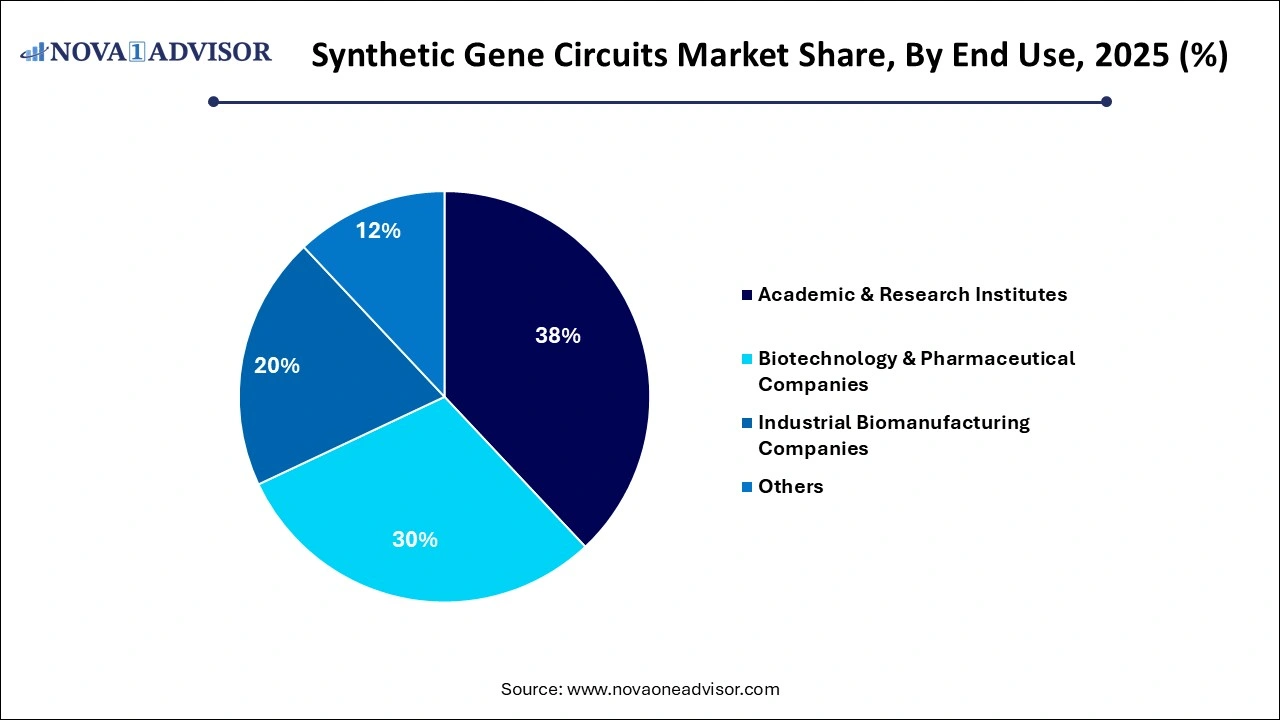
The biotechnology and pharmaceutical companies segment is projected to grow at the highest CAGR in the coming years. This is mainly because of synthetic biology investments targeted at advanced therapeutics like CAR-T cell therapies, which rely on precise gene control. Integration of AI and automation drastically reduced production errors and improved throughput, making large-scale, cost-effective circuit manufacturing a reality. The strategic biotech-academic collaborations and high-throughput industrial demand accelerated the transition of these customizable regulatory elements into life-saving commercial applications.
Synthetic Gene Circuits Market Regional Insights
What Made North America the Dominant Region in the Synthetic Gene Circuits Market?
North America maintained dominance in the synthetic gene circuits market while holding the largest share in 2025. The region’s dominance is attributed to the substantial funding from the NIH, and venture capital fueled a high-speed innovation cycle in genomic research and synthetic biology. The region's concentration of industry leaders, such as Thermo Fisher and Twist Bioscience, provided the critical DNA synthesis infrastructure needed for rapid circuit design. A supportive FDA regulatory environment and a robust academic ecosystem accelerated the widespread adoption of these tools for personalized medicine and gene therapy.
U.S. Synthetic Gene Circuits Market Trends
The U.S. is a major contributor to the market in North America due to the high-stakes therapeutic and gene-editing projects, integrating AI and machine learning. Industry leaders like Ginkgo Bioworks and Twist Bioscience optimized these circuits for unprecedented predictability and precise gene expression. The rapid scaling of CAR-T cell therapies and metabolic engineering turned these smart regulatory elements into the most critical infrastructure for the global synthetic biology market.
What Makes Asia Pacific the Fastest-Growing Area in the Market?
Asia Pacific is expected to grow at the fastest rate in the coming years. This is due to massive government-led infrastructure projects, such as China’s GIDL and India’s biopharma SHAKTI scheme. The surge in mRNA and CAR-T therapies met a critical demand for personalized medicine, while advanced AI-driven modeling and lowered DNA synthesis costs accelerated the prototyping of complex genetic circuits. A vibrant ecosystem of emerging startups in India and China, supported by robust academic collaborations, transitioned these innovations from the lab to high-value industrial and agricultural applications.
China Synthetic Gene Circuits Market Trends
China is a key player in the Asia Pacific synthetic gene circuits market due to the government-backed R&D and massive investments in biofoundries across the Asia-Pacific region accelerated the scalability of high-throughput genetic engineering. By focusing on precision medicine, researchers developed smart engineered living materials and intelligent probiotics capable of responding to real-time pathological signals. The integration of these logic-based circuits into cell-based therapies for cancer and metabolic diseases turned them into the region's primary driver for both healthcare and industrial innovation.
How is the Opportunistic Rise of Europe in the Synthetic Gene Circuits Market?
Europe is experiencing a strategic growth in the market due to growing investment in research centres created a high-density infrastructure for advanced genetic engineering. Massive venture capital inflows into startups like eureKARE accelerated the transition of synthetic circuits from theoretical models to functional advanced therapy medicinal products (ATMPs). The surge in clinical-phase trials for cell therapies and bioproduction established these specific regulatory elements as the primary technical engine of the European market.
United Kingdom Synthetic Gene Circuits Market Trends
The United Kingdom is leading the market in Europe due to the growing demand for high-accuracy synthetic DNA and complex CRISPR-based gene editing. By transitioning from bench-top models to scalable, modular genetic circuits, UK-based spinouts and SMEs created highly precise logic gates for personalized medicine and regenerative therapies. The integration of these advanced diagnostic circuits into clinical-phase trials advanced diagnostic and therapeutic circuits into clinical-phase trials solidified the segment's market leadership.
Synthetic Gene Circuits Market Supply Chain Analysis
R&D, Design, and Bioinformatics (Upstream): This initial stage focuses on the conceptualization, modeling, and computational design of synthetic gene circuits using software tools. Researchers design genetic circuits, such as logic gates, switches, and oscillators, using bioinformatics to simulate their behavior within a cellular environment before physical assembly.
Key Players: Ginkgo Bioworks, Benchling, TeselaGen Biotechnology, Twist Bioscience, Sangamo Therapeutics.
DNA Synthesis, Oligonucleotides, and Components: This stage involves the physical synthesis of DNA sequences, genes, and genetic parts based on the designed, digitized blueprint. High-throughput synthesis allows for the rapid creation of synthetic genes and oligonucleotides necessary for assembling complex functional modules.
Key Players: Twist Bioscience, GenScript Biotech, Integrated DNA Technologies, Eurofins Scientific, Merck KGaA.
Applications and End-Use: The final, validated gene circuits are deployed in various applications such as therapeutics, diagnostics, and industrial biotechnology. Key end-users, including pharma/biotech companies and research institutions, use these technologies for advanced diagnostics or cell therapies.
Key Players: Gilead Sciences, Vertex Pharmaceuticals, Amyris, Novozymes, and Academic/Research Institutes.
Synthetic Gene Circuits Market Companies
- Ginkgo Bioworks: Ginkgo Bioworks utilizes its automated foundry platform to program cells, allowing clients across diverse industries to design, test, and manufacture complex synthetic gene circuits for specialized applications.
Twist Bioscience: Twist Bioscience contributes to the market by producing high-throughput synthetic DNA on silicon chips, facilitating the fast and cost-effective construction of gene circuits, pathways, and variant libraries. - GenScript Biotech: GenScript Biotech offers integrated, automated gene synthesis services that enable researchers to create complex, customized DNA constructs for synthetic biology research.
- Precigen: Precigen leverages synthetic biology to develop advanced cell and gene therapies, focusing on creating innovative, ultra-sensitive gene circuits for oncology, autoimmune disorders, and infectious diseases.
- Sangamo Therapeutics: Sangamo Therapeutics utilizes its zinc finger protein (ZFP) technology to engineer gene regulation circuits, allowing for precise, conditional control of gene expression in therapeutic contexts. Their research focuses on developing sophisticated genetic switches that can turn specific genes on or off, essential for controlling complex disease pathways.
Recent Developments
In May 2025, Twist Bioscience and Ginkgo Bioworks have revised their collaboration into a three-year, $15 million agreement, featuring a technology transfer where Twist acquires long DNA technology assets from Ginkgo. The restructured deal allows Ginkgo to continue ordering high-quality DNA from Twist without purchase minimums while receiving preferential pricing.
In October 2025, MIT engineers developed DIAL, a modular control mechanism using DNA spacers and recombinases to precisely adjust synthetic gene expression in cells to high, medium, low, or "off" set points. This tool allows for consistent protein levels and editable control, enabling more reliable cell reprogramming, such as converting fibroblasts to neurons.
In February 2026, RAS-Targeting Circuits introduced modular gene circuits designed to selectively target RAS-driven cancers, offering unprecedented selectivity in expressing therapeutic proteins only in mutated cells.
Exclusive Analysis on the Synthetic Gene Circuits Market
The global synthetic gene circuits market is leveraged by high demand for precise gene control in personalized medicine and rapid diagnostics. Segmentally, circuit-specific synthetic regulatory elements lead product demand, enabling accurate modulation in biomanufacturing and therapeutics. The research segment dominates applications, driven by academic institutions investigating novel circuits, while the therapeutics segment accelerates due to CAR-T cell advancements. Furthermore, memory & signal processing circuits are gaining traction for high-performance computing in complex cellular tasks, highlighting a shift toward intelligent, programmable biological systems. North America leads the market owing to high R&D investments, while Asia Pacific emerges as the fastest-growing region driven by increased biotech initiatives.
Segments Covered in the Report
By Product
- Toggle Switch Circuits
- Genetic Toggle Switches
- Bistable Regulatory Circuits
- Oscillators
- Repressilator Circuits
- Clock-like Gene Oscillators
- Logic Gates
- AND, OR, NOT, NAND, & NOR Gene Circuits
- Multi-input Logic Gene Networks
- Memory & Signal Processing Circuits
- Genetic Memory Circuits
- Signal Amplification & Sensing Circuits
- Circuit-Specific Synthetic Regulatory Elements
- Circuit-specific Synthetic Promoters
- Circuit-specific Riboswitches
- Circuit-specific Transcription Factor Libraries
- Others
By Application
- Research
- Therapeutics
- Industrial Biotechnology
- Diagnostics & Biosensing
- Agriculture
- Others
By End Use
- Academic & Research Institutes
- Biotechnology & Pharmaceutical Companies
- Industrial Biomanufacturing Companies
- Others
By Region
- North America:
- U.S.
- Canada
- Mexico
- Rest of North America
- South America:
- Brazil
- Argentina
- Rest of South America
- Europe
- Western Europe
- Germany
- Italy
- France
- Netherlands
- Spain
- Portugal
- Belgium
- Ireland
- UK
- Iceland
- Switzerland
- Poland
- Rest of Western Europe
- Eastern Europe
- Austria
- Russia & Belarus
- ürkiye
- Albania
- Rest of Eastern Europe
- Asia Pacific:
- China
- Taiwan
- India
- Japan
- Australia and New Zealand,
- ASEAN Countries (Singapore, Malaysia)
- South Korea
- Rest of APAC
- MEA:
- GCC Countries
- Saudi Arabia
- United Arab Emirates (UAE)
- Qatar
- Kuwait
- Oman
- Bahrain
- South Africa
- Egypt
- Rest of MEA

Proceed to Buy
Instant PDF delivery on confirmation

Synthetic Gene Circuits Market Size to Worth Around USD 7.54 Bn by 2035
 Request Customization
 Download Sample

Get a Sample of this Report
Synthetic Gene Circuits Market