

Doxorubicin Market Size, Share, and Trends 2026 to 2035
 Status Published
 Category Healthcare


Content
Doxorubicin Market Size and Growth 2026 to 2035
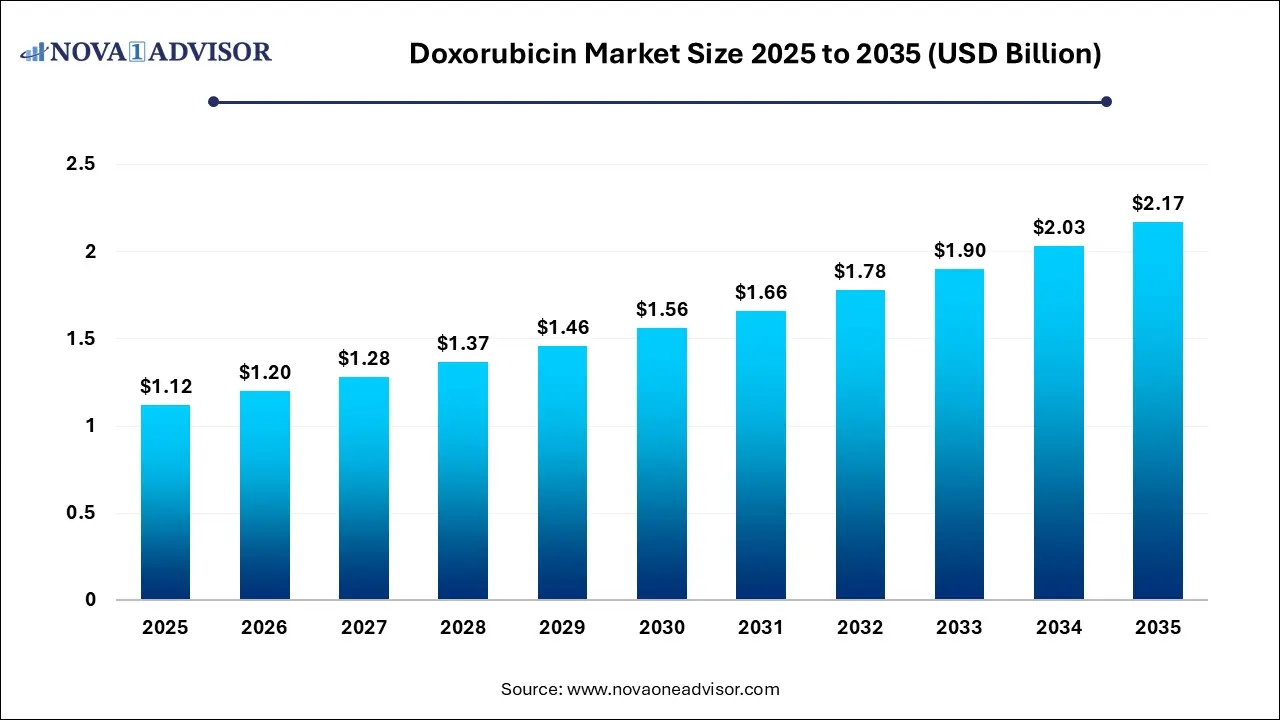
The global doxorubicin market was valued at approximately USD 1.12 billion in 2025 and is anticipated to reach nearly USD 2.17 billion by 2035, expanding at a CAGR of 6.8% during the forecast period from 2026 to 2035. Doxorubicin, a widely used anthracycline-based chemotherapy medication, continues to play a crucial role in cancer treatment across the global oncology therapeutics landscape.
Key Market Trends & Insights
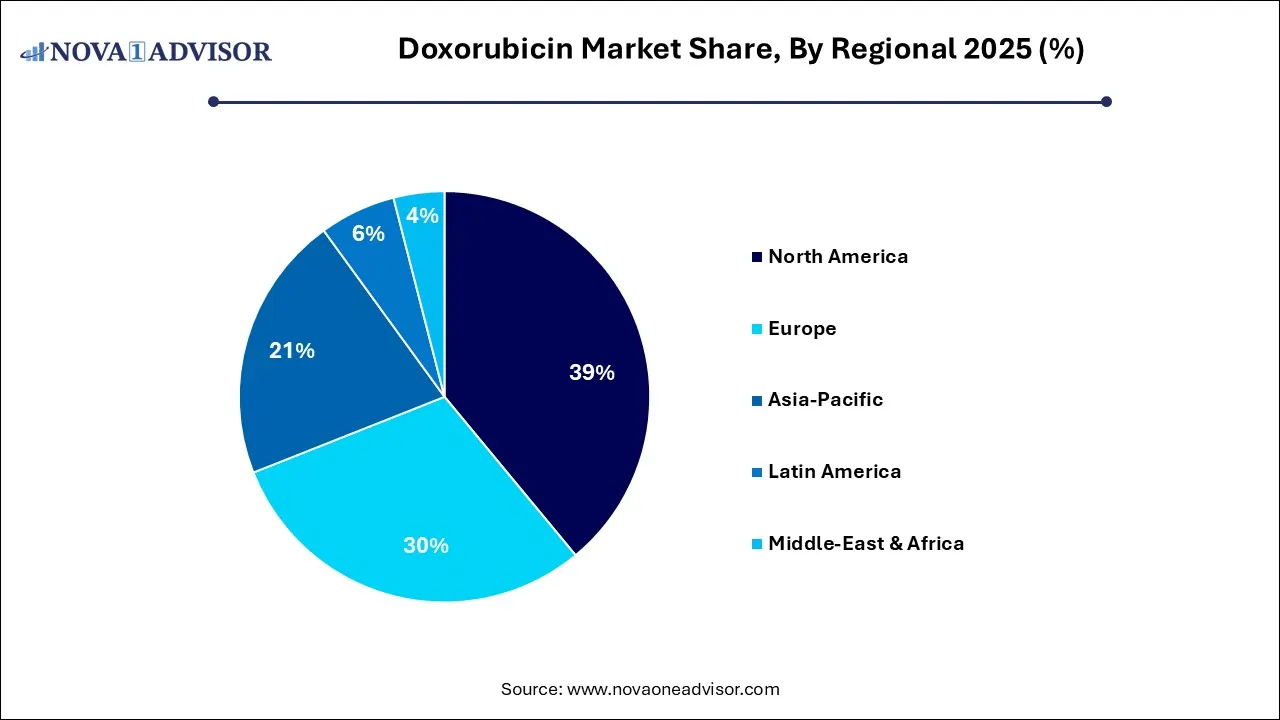
- North America emerged as the leading regional market, capturing 39.0% of the global revenue share in 2025.
- The United States represented the largest contributor to the North American doxorubicin market.
- Based on drug formulation, the doxorubicin injection segment held the highest market share, accounting for 75.0% of total revenue in 2025.
- By application, the breast cancer segment generated the largest revenue share owing to the increasing prevalence of breast cancer and widespread adoption of chemotherapy treatments.
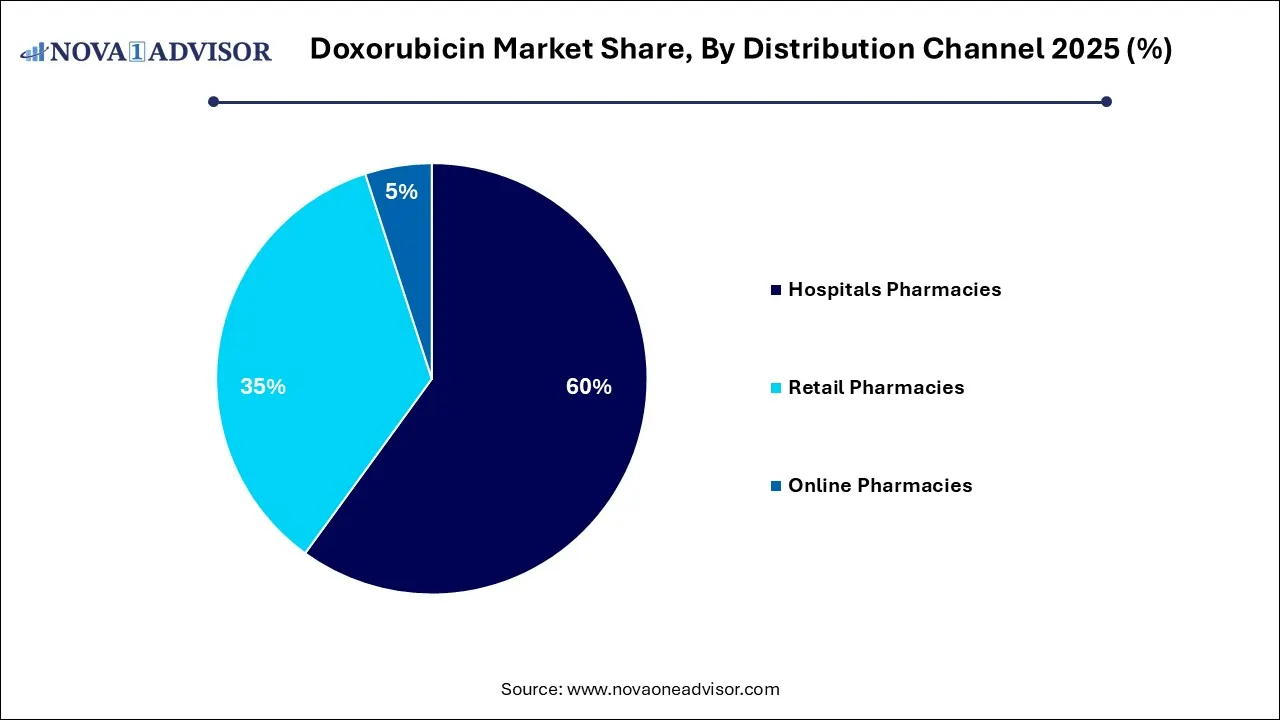
- In terms of distribution channel, hospital pharmacies dominated the market in 2025 due to the high administration rate of chemotherapy drugs in hospital settings.
Market Overview
The doxorubicin market represents a critical segment within the global oncology therapeutics industry. Doxorubicin is an anthracycline antibiotic chemotherapy drug widely used in the treatment of multiple cancers, including breast cancer, leukemia, lymphoma, bladder cancer, Kaposi sarcoma, and several other solid tumors. Since its introduction into clinical oncology, doxorubicin has become one of the most commonly prescribed cytotoxic agents due to its broad-spectrum anti-cancer activity and proven therapeutic effectiveness.
Doxorubicin functions by interfering with DNA replication and inhibiting topoisomerase II activity, ultimately leading to cancer cell death. The drug has remained a cornerstone of combination chemotherapy regimens because of its high efficacy against rapidly dividing cancer cells. Despite the emergence of targeted therapies and immunotherapies, conventional chemotherapeutic agents such as doxorubicin continue to maintain significant clinical relevance, especially in developing countries where access to advanced biologics may remain limited.
The increasing global cancer burden is one of the primary factors driving market growth. Rising incidences of breast cancer, blood cancers, and lymphomas are contributing to growing demand for chemotherapy agents worldwide. According to oncology trends observed across healthcare systems, breast cancer continues to be among the most diagnosed cancers globally, resulting in sustained demand for anthracycline-based therapies.
Another important factor supporting the market is the increasing expansion of oncology treatment infrastructure in emerging economies. Governments and private healthcare organizations are investing heavily in cancer treatment facilities, specialized oncology hospitals, and chemotherapy administration centers. This expansion is improving patient access to life-saving oncology medications, including doxorubicin formulations.
Technological advancements in pharmaceutical manufacturing are also influencing market dynamics. Liposomal doxorubicin formulations have emerged as an important innovation designed to minimize cardiotoxicity while improving drug delivery efficiency. These advanced formulations encapsulate the drug within liposomes, enabling targeted delivery and reducing systemic side effects. Such innovations are improving patient tolerance and expanding therapeutic applications.
The market is also benefiting from increased generic drug manufacturing activities. Multiple pharmaceutical companies are engaged in producing cost-effective generic versions of doxorubicin, particularly in Asia Pacific and Latin America. The growing availability of generic products is improving affordability and widening treatment accessibility across low- and middle-income countries.
North America currently dominates the global doxorubicin market due to advanced healthcare infrastructure, high cancer screening rates, and strong pharmaceutical research capabilities. Europe maintains a substantial market presence because of increasing oncology treatment demand and favorable reimbursement systems. Meanwhile, Asia Pacific is expected to experience the fastest growth due to rising cancer prevalence, expanding healthcare investments, and growing awareness regarding early cancer diagnosis and treatment.
As oncology treatment paradigms continue evolving, the doxorubicin market is expected to maintain steady expansion. Combination chemotherapy protocols, innovations in drug delivery systems, and rising investments in cancer care are likely to shape the future trajectory of the industry over the coming years.
Market Outlook
- Market Growth Overview: The global doxorubicin market is expected to grow significantly between 2025 and 2035, driven by the growing cancer burden, shift toward liposomal and targeted formulations, and expansion of generic therapeutics.
- Sustainability Trends: Sustainability trends involve eco-friendly manufacturing and supply chain, shift toward liposomal formulations, and biosimilars and generic expansion.
- Major Investors: Major investors in the market include Pfizer Inc., Johnson & Johnson, Baxter International Inc., Teva Pharmaceutical Industries Ltd., and Sun Pharmaceutical Industries Ltd.
How is AI Transforming the Doxorubicin Market
Artificial intelligence is significantly transforming the doxorubicin market by improving oncology research, treatment planning, drug discovery, and patient monitoring. AI technologies are helping pharmaceutical companies and healthcare providers optimize chemotherapy administration while enhancing clinical outcomes for cancer patients.
One of the most impactful applications of AI is in personalized oncology treatment planning. Cancer patients often respond differently to chemotherapy due to variations in genetics, tumor biology, and overall health conditions. AI-driven predictive analytics systems analyze patient records, genomic data, imaging results, and treatment histories to determine the most suitable chemotherapy regimens. In the case of doxorubicin, AI algorithms can help physicians optimize dosage levels while minimizing toxicity risks.
AI is also accelerating oncology drug discovery and clinical research. Pharmaceutical companies are increasingly utilizing machine learning platforms to identify novel drug combinations involving doxorubicin. These systems can rapidly analyze millions of molecular interactions and clinical datasets to identify therapeutic synergies. For example, AI-supported screening has enabled researchers to explore new liposomal delivery technologies and combination therapies for resistant cancers.
Another major transformation area involves toxicity prediction and patient safety management. Doxorubicin is associated with cardiotoxicity risks, particularly during long-term treatment. AI-powered monitoring systems can assess patient cardiac biomarkers, ECG data, and treatment progression to detect early warning signs of cardiac complications. This enables healthcare providers to intervene proactively and reduce severe side effects.
AI is additionally improving operational efficiency within oncology centers. Automated scheduling systems, treatment optimization software, and digital oncology platforms are streamlining chemotherapy workflows. Hospitals can use AI-based inventory management systems to improve supply chain efficiency for oncology drugs, including doxorubicin formulations.
In radiology and pathology, AI-driven imaging systems are assisting oncologists in evaluating tumor response after chemotherapy. Advanced image analysis algorithms can measure subtle changes in tumor size and metabolic activity more accurately than traditional assessment methods. These insights help physicians determine whether doxorubicin-based regimens are delivering desired therapeutic outcomes.
As AI adoption increases across healthcare systems, its integration with oncology therapeutics is expected to strengthen the future growth of the doxorubicin market through improved precision, safety, and treatment effectiveness.
Doxorubicin Market Report Scope
| Report Coverage | Details |
| Market Size in 2026 | USD 1.20 Billion |
| Market Size by 2035 | USD 2.17 Billion |
| Growth Rate From 2026 to 2035 | CAGR of 6.8% |
| Base Year | 2025 |
| Forecast Period | 2026 to 2035 |
| Segments Covered | Drug Formulation, Application, Distribution Channel, Region |
| Market Analysis (Terms Used) | Value (USD Million/Billion) or (Volume/Units) |
| Regional Scope | North America; Europe; Asia Pacific; Central and South America; the Middle East and Africa |
| Key Companies Profiled | Pfizer Inc.; Johnson & Johnson Services, Inc.; Sun Pharmaceutical Industries Ltd; Cipla.; Cadila Pharmaceuticals.; Novartis AG; Dr. Reddy’s Laboratories Ltd.; SRS Life Sciences; MicroBiopharm Japan Co., Ltd.; Baxter. |
Segmental Insights
By Drug Formulation
How did the doxorubicin injection segment dominate the Global Doxorubicin market?
The doxorubicin injection segment is driven by its proven clinical efficacy in treating high-incidence malignancies, including breast and lung cancers, leukemias, and sarcomas. The development of advanced liposomal and sustained-release formulations represents a critical clinical milestone, successfully encapsulating the active agent to enhance tumor targeting while drastically minimizing severe systemic toxicities like cardiotoxicity.
How did the Lyophilized powder segment expect to hold the fastest-growing Global Doxorubicin market in the coming years?
The lyophilized powder segment is driven by continuous innovation in automated freeze-drying technologies, and targeted liposomal delivery systems are successfully improving the drug's therapeutic window while mitigating on-ground clinical handling hazards. The widespread manufacturing of cost-effective lyophilized generics enables broad market penetration, establishing hospital pharmacies as highly efficient, high-volume hubs for standardized oncology procurement.
By Application
How did the breast cancer segment dominate the Global Doxorubicin market?
The breast cancer segment is driven by the rising global incidence rates and the established clinical potency of doxorubicin as a foundational chemotherapy regimen. The market value of this therapeutic agent has been significantly amplified by advanced pegylated liposomal formulations, which encapsulate the drug to enable targeted tumor delivery while drastically mitigating systemic toxicities.
How did the bladder cancer segment expect to hold the fastest-growing Global Doxorubicin market in the coming years?
The bladder cancer segment is driven by advanced engineering in lyophilization and liposomal drug delivery systems, which have vastly improved formulation stability while optimizing targeted tumor site delivery and minimizing severe cardiac side effects. Doxorubicin remains an indispensable, highly effective standard for localized intravesical therapy in treating non-muscle invasive bladder cancer (NMIBC) and preventing tumor recurrence following transurethral resections.
By Distribution Channel
How did the hospital pharmacies segment dominate the Global Doxorubicin market?
The hospital pharmacies segment is driven by the requirement for rigorous, sterile compounding and precise intravenous preparation, which necessitates the direct, on-site supervision of specialized clinical pharmacists. Furthermore, because doxorubicin therapies demand continuous, high-vigilance patient monitoring to manage severe adverse reactions, such as cardiotoxicity, treatments must remain localized within these controlled institutional settings.
How did the online pharmacies segment expect to hold the fastest-growing Global Doxorubicin market in the coming years?
The online pharmacies segment is driven by integrating advanced e-prescription systems to streamline the verification and fulfillment of complex chemotherapeutic regimens. The modern platforms are enhancing long-term patient compliance by embedding comprehensive value-added services, including automated refill management, digital counseling, and personalized adherence tracking.
By Regional
How did the North America region account for the largest share in the Global Doxorubicin market?
North America is driven by a mature healthcare infrastructure and high cancer prevalence rates, which drive continuous, large-scale demand for foundational chemotherapies, such as doxorubicin. Extensive distribution networks across specialized oncology clinics and hospitals ensure immediate patient access, while robust private insurance and favorable public reimbursement structures accelerate the clinical adoption of premium, targeted liposomal formulations.
U.S. Global Doxorubicin Market Trends
The U.S. domestic healthcare networks continuously invest in supply chain resilience to eliminate historic generic shortages. The U.S. market is establishing a highly stable, technology-driven foundation for long-term oncology delivery. The company is heavily on doxorubicin as a core therapeutic anchor, utilizing its affordable generic base to sustain multi-drug regimens and next-generation antibody-drug conjugate (ADC) clinical trials.
How did the Asia-Pacific region become the fastest-growing Global Doxorubicin Market during the forecast period?
Asia Pacific’s rising regional cancer burden, proactive government health programs, and an accelerated shift toward localized pharmaceutical manufacturing. To counter the prohibitive costs of novel biologics, regional manufacturers across major economies, such as India and China, are rapidly scaling the production of highly affordable generic and advanced liposomal doxorubicin formulations.
China Global Doxorubicin Market Trends
China’s escalating breast cancer incidence rates, the national medicine products administration continuous to cement doxorubicin as a foundational, non-substitutable anchor across standardized chemotherapy regimens nationwide. To expand patient access and compress healthcare expenditures, major domestic pharmaceutical players are rapidly scaling affordable generic production to efficiently manage soaring clinical volumes.
How Did Europe Hold A Notable Share in the Global Doxorubicin Market?
Europe’s high regional cancer burden and proactive clinical guidelines from organizations, such as the European Society for Medical Oncology. The regional sophisticated clinical adoption of advanced liposomal drug delivery systems allows healthcare providers to safely deliver targeted, lower-toxicity treatments to high-risk and elderly patient demographics.
Germany Global Doxorubicin Market Trends
Germany’s rapid clinical shift toward advanced liposomal doxorubicin formulations to mitigate severe cardiotoxicity risks. The therapeutic rates, which cement the drug as an indispensable component in combination chemotherapy protocols. Concurrently, public health insurers and institutional payers are aggressively prioritizing cost-effective generic alternatives, expanding vital patient access while pressuring legacy brands to innovate.
Key Players in the Global Doxorubicin Market
- Pfizer, Inc.
Pfizer manufactures and supplies conventional doxorubicin hydrochloride injections globally, providing a trusted, first-line chemotherapy solution for various blood and solid tumor cancers. Through its established global distribution channels and healthcare partnerships, the company ensures widespread clinical availability of this essential oncology medication.
- Sun Pharmaceutical Industries Ltd.
Sun Pharma acts as a leading global supplier of generic oncology drugs, specifically manufacturing therapeutically equivalent versions of liposomal doxorubicin. Their cost-effective production model expands access to these complex, advanced formulations, lowering healthcare costs and driving volume in international markets.
- Janssen Pharmaceuticals
Janssen developed and markets liposomal doxorubicin under the brand name DOXIL (or Caelyx), establishing a cornerstone targeted therapy for ovarian cancer, multiple myeloma, and Kaposi's sarcoma.
Recent Developments
- In February 2026, Pfizer Inc. announced expanded oncology research collaborations focused on combination chemotherapy development.
- In January 2026, Johnson & Johnson highlighted advancements in oncology drug delivery technologies aimed at improving treatment precision.
- In November 2025, Sun Pharmaceutical Industries Ltd. expanded production capabilities for oncology injectable products to strengthen global supply chains.
- In September 2025, Dr. Reddy's Laboratories announced strategic investments in generic oncology drug manufacturing facilities.
- In July 2025, Teva Pharmaceutical Industries Ltd. introduced initiatives focused on improving access to affordable chemotherapy medications globally.
Segments Covered in the Report
This report forecasts revenue growth at country levels and provides an analysis of the latest industry trends in each of the sub-segments from 2021 to 2035. For this study, Nova one advisor, Inc. has doxorubicin market.
By Formulation
- Lyophilized Powder
- Doxorubicin Injection
By Application
- Bladder Cancer
- Kaposi Sarcoma
- Leukemia
- Lymphoma
- Breast Cancer
- Other
By Distribution
- Hospitals Pharmacies
- Retail Pharmacies
- Online Pharmacies
By Region
- North America
- Europe
- Asia Pacific
- Latin America
- Middle East and Africa (MEA)
FAQ's

Proceed to Buy
Instant PDF delivery on confirmation

 Request Customization
 Download Sample

Get a Sample of this Report
Doxorubicin Market