

Electroceuticals Market Size, Share, Growth, Report 2026 to 2035
 Status Published
 Category Healthcare


Content
Electroceuticals Market Size and Growth 2026 to 2035
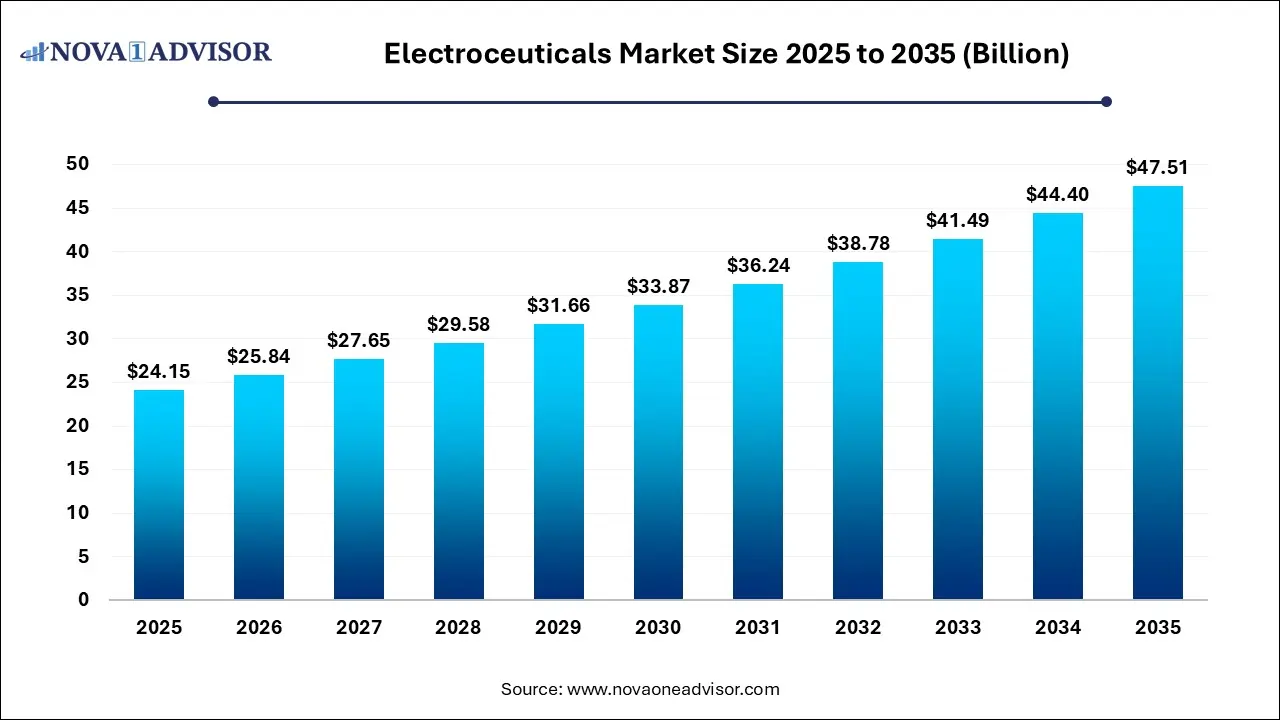
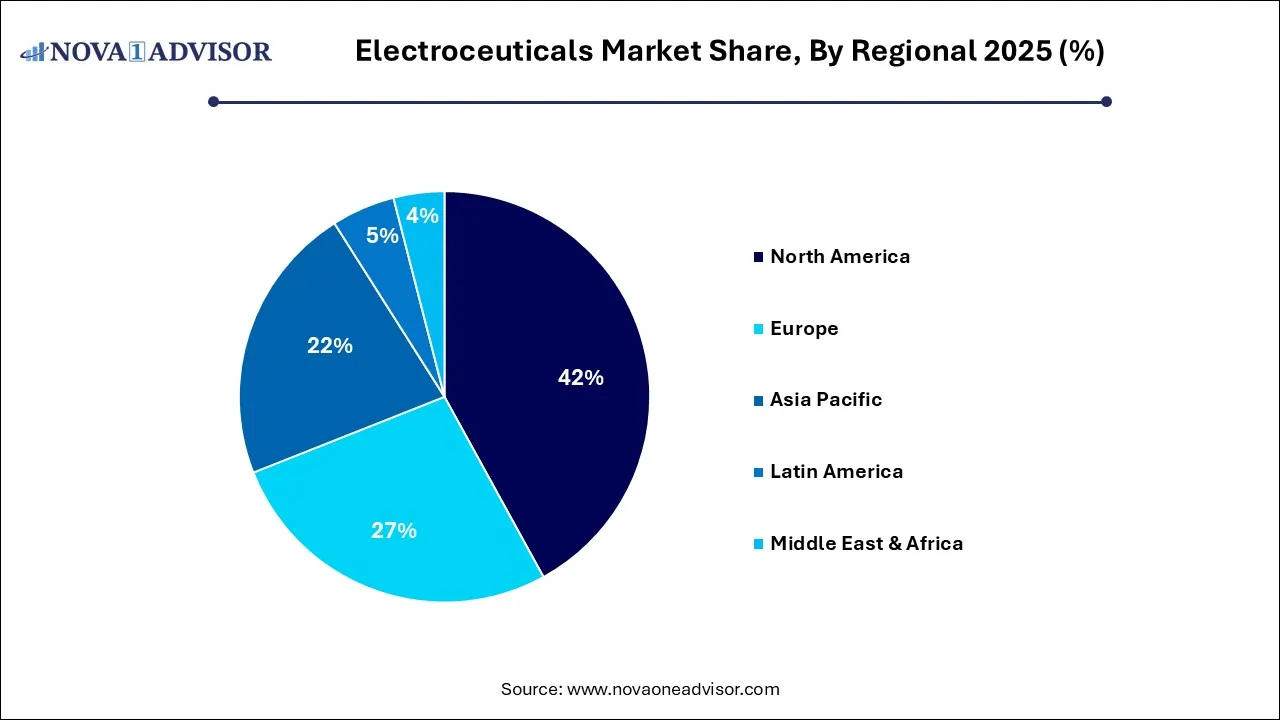
The global electroceuticals market size was valued at USD 24.15 billion in 2025 and is projected to grow from USD 25.84 billion in 2026 to USD 47.51 billion by 2035, at a CAGR of 7.0% from 2026 to 2035. North America dominated the market, accounting for a revenue share of 42.0% in 2025.
Key Takeaway
- By device, the cardiac rhythm management (CRM) devices segment dominated the market with the largest share in 2025.
- By device, the retinal & vision implants devices segment is expected to grow at the fastest CAGR over the forecast period.
- By modality, the implantable segment dominated the market with the largest share in 2025.
- By application, the cardiology segment dominated the market with the largest share in 2025.
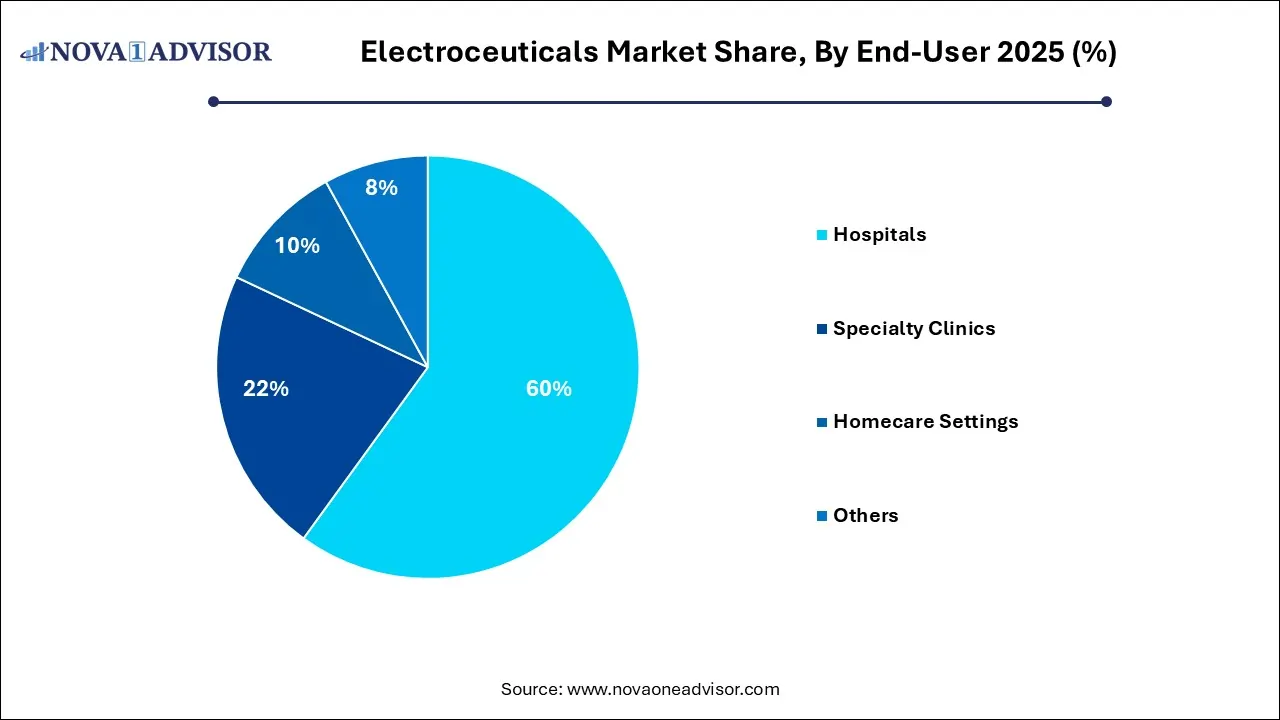
- By end user, the hospitals segment dominated the market with the largest share of 60.0% in 2025.
- By region, North America dominated the market with the largest share of 42.0% in 2025.
Market Overview
The global electroceuticals market is experiencing robust growth, driven by the increasing adoption of bioelectronic therapies for the treatment of chronic diseases. Electroceuticals use targeted electrical stimulation to regulate nerve activity and restore normal physiological function, offering a precise alternative to conventional drug therapies. Widely used devices such as pacemakers, implantable cardioverter defibrillators (ICDs), deep brain stimulators, spinal cord stimulators, cochlear implants, and vagus nerve stimulators are expanding the scope of treatment across cardiology, neurology, pain management, and sensory disorders.
Technological advancements, including rechargeable batteries, wireless connectivity, MRI-compatible devices, adaptive stimulation algorithms, and remote monitoring capabilities, are enhancing treatment effectiveness and patient convenience. Additionally, growing prevalence of chronic diseases, expanding clinical applications, increasing regulatory approvals, and rising adoption of minimally invasive therapies are fueling market growth. As healthcare systems continue embracing precision medicine and digital health, electroceuticals are expected to play an increasingly important role in long-term disease management.
Market Outlook
- Market Growth Overview: The global electroceuticals market is expected to grow significantly between 2025 and 2035, driven by growing cardiovascular conditions across the globe.
- Sustainability Trends: Sustainability trends involve circuit board recycling, device miniaturization, and AI-driven power efficiency.
- Major Investors: Major investors in the market include Medtronic (Ireland), Abbott (US), Boston Scientific (US), LivaNova (UK), and Biotronik (Germany).
How is AI impacting the global electroceuticals market?
Artificial intelligence (AI) is transforming the electroceuticals market by enabling more personalized, adaptive, and data-driven therapies. AI-powered algorithms analyze physiological signals and patient data to optimize stimulation parameters, improving treatment outcomes while reducing adverse effects. In implantable devices such as cardiac rhythm management systems and neuromodulation therapies, AI supports real-time monitoring, automated therapy adjustments, and early detection of disease progression or device-related issues.
AI also enhances surgical precision through advanced imaging, navigation, and robotic-assisted implantation technologies. Furthermore, connected electroceutical devices leverage AI-enabled remote monitoring platforms to continuously assess patient health, generate clinical alerts, and support proactive disease management. As AI continues to evolve, it is expected to accelerate innovation in bioelectronic medicine, improve clinical outcomes, and strengthen the integration of electroceuticals within digital healthcare ecosystems.
Major Trends in the Electroceuticals Market
The electroceuticals market is advancing rapidly with innovations in bioelectronic medicine and digital healthcare. The adoption of rechargeable implantable devices, AI-powered therapy optimization, and wireless remote monitoring is enhancing treatment efficiency and patient convenience. Growing demand for MRI-compatible devices, adaptive closed-loop neuromodulation systems, and miniaturized implants is supporting minimally invasive procedures and personalized care. Additionally, increasing investments in wearable electroceuticals, robotic-assisted implantation, cloud-based patient management, and research into inflammatory and autoimmune disease applications are expected to drive sustained market growth.
Electroceuticals Market Report Scope
| Report Coverage | Details |
| Market Size in 2026 | USD 25.84 Billion |
| Market Size by 2035 | USD 47.51 Billion |
| Growth Rate From 2026 to 2035 | CAGR of 7.0% |
| Base Year | 2025 |
| Forecast Period | 2026 to 2035 |
| Segments Covered | By Device, By Application, By End User, By Region |
| Market Analysis (Terms Used) | Value (USD Million/Billion) or (Volume/Units) |
| Regional Scope | North America; Europe; Asia Pacific; Central and South America; the Middle East and Africa |
| Key Companies Profiled | Medtronic PLC, Abbott Laboratories Inc., Boston Scientific Corp., LivaNova PLC, Cochlear, Ltd., Sonova Holding AG, Nevro Corp., ElectroCore LLC, and BioElectronics Corp |
Market Dynamics
Driver: Rising Burden of Chronic Diseases
The increasing prevalence of chronic diseases such as cardiovascular disorders, neurological conditions, chronic pain, hearing impairment, epilepsy, and Parkinson’s disease is a major driver of the electroceuticals market. As the global population ages, demand for long-term, minimally invasive treatment options continues to rise. Electroceutical devices offer targeted therapy by regulating neural and cardiac activity, improving patient outcomes, reducing dependence on medications, and enhancing quality of life. Growing clinical evidence and wider physician acceptance are further accelerating market adoption.
Restraint: High Treatment Costs and Limited Accessibility
The high cost of implantable electroceutical devices, surgical procedures, advanced imaging, and long-term follow-up care remains a key challenge for market growth. Limited reimbursement policies and stringent insurance eligibility criteria restrict patient access in several regions. Additionally, shortages of specialized healthcare professionals and advanced treatment facilities in emerging economies continue to limit the widespread adoption of electroceutical therapies.
Opportunity: Expanding Applications of Bioelectronic Medicine
The expanding use of electroceuticals beyond traditional cardiovascular and neurological applications presents significant growth opportunities. Ongoing research into treating inflammatory diseases, diabetes, obesity, autoimmune disorders, gastrointestinal conditions, and mental health disorders is broadening the market's therapeutic scope. Advances in AI-driven adaptive stimulation, miniaturized implants, wireless technologies, and personalized bioelectronic therapies are expected to improve treatment effectiveness and accelerate the adoption of electroceuticals across precision medicine.
Segmental Insights
By Device
Why did the cardiac rhythm management (CRM) devices segment dominate the global electroceuticals market?
The cardiac rhythm management (CRM) devices segment dominated the market with the largest share in 2025. The dominance of the segment can be attributed to the increasing incidence of cardiovascular diseases and technological miniaturization. In addition, modern implantable cardioverter-defibrillators (ICDs) and pacemakers are designed with advanced engineering to ensure patient safety during magnetic resonance imaging (MRI) procedures.
How did the retinal & vision implant devices segment expected to hold the fastest-growing global electroceuticals market in the coming years?
The retinal & vision implant devices segment is expected to grow at the fastest CAGR over the forecast period. The growth of the segment can be credited to the growing prevalence of irreversible blindness conditions such as retinitis pigmentosa. Leading medical research institutions and developers are leveraging artificial intelligence to optimize the processing of raw visual data.
By modality
Why did the implantable devices segment dominate the global electroceuticals market?
The implantable segment dominated the market with the largest share in 2025. The dominance of the segment can be linked to the surge in chronic illness and rapid technological breakthroughs. These medical devices selectively target specific nerves or organs, reducing the adverse systemic side effects typically associated with conventional, daily pharmaceuticals.
How did the non-implantable segment expected to hold the fastest-growing global electroceuticals market in the coming years.
The non-implantable segment is expected to grow at the fastest CAGR over the forecast period. The growth of the segment can be driven by an ongoing transition towards minimally invasive therapies and favourable healthcare awareness in emerging economies. In addition, these therapies target specific nerves with mild electrical currents to treat ailments and reduce the dependency on long-term pharmaceutical interventions.
By Application
Why did the cardiology segment dominate the global electroceuticals market?
The cardiology segment dominated the market with the largest share in 2025. The dominance of the segment is owing to the increasing geriatric populations and ongoing advancements in leadless and MRI-safe technologies. Moreover, the rising incidence of sudden cardiac arrest serves as a primary driver for the increased demand for immediate, life-saving shock therapies delivered by implantable cardioverter-defibrillators (ICDs).
How did the pain management segment expected to hold the fastest-growing global electroceuticals market in the coming years
The pain management segment is expected to grow at the fastest CAGR over the forecast period. The growth of the segment can be linked to the rapid technological innovations in wearable and implantable neurostimulation devices. Advancements in wireless connectivity along with the integration of artificial intelligence (AI) facilitate highly precise, customized stimulation.
By End-User
Why did the hospitals segment dominate the global electroceuticals market?
The hospitals segment dominated the market with the largest share in 2025. The dominance of the segment can be attributed to the growing volume of complex implantable device procedures and their ability to offer multidisciplinary, comprehensive care. Hospitals possess the necessary infrastructure to retain the neurosurgeons, cardiologists, and specialized technicians needed for the safe implantation and programming of these devices.
How did the homecare settings segment expected to hold the fastest-growing global electroceuticals market in the coming years.
The homecare settings segment is expected to grow at the fastest CAGR over the forecast period. The growth of the segment can be credited to the ongoing transition toward non-invasive therapies and the increasing burden of chronic illness globally. Home-care electroceutical devices mitigate healthcare expenditures by decreasing hospital readmissions and preventing prolonged inpatient hospitalization.
By Regional
Why did the North American region account for the largest share in the global electroceuticals market?
North America dominated the market with the largest share in 2025. The dominance of the region can be attributed to the presence of robust and established healthcare infrastructure and extensive regional R&D investments by major market players. In addition, the region benefits from a swift transition toward device miniaturization, wireless connectivity, and artificial intelligence integration. The presence of major market leaders ensures a steady pipeline for clinical trials.
U.S. Global Electroceuticals Market Trends
The growth of the market in the country can be driven by large healthcare spending and a rise in the incidence of chronic conditions such as neurological disorders and heart diseases. The U.S. Food and Drug Administration (FDA) routinely develops its regulatory review frameworks for novel, minimally invasive medical devices.
Why did the Europe region become the fastest-growing global electroceuticals market during the forecast period?
Europe is expected to grow at the fastest CAGR over the forecast period. The growth of the region can be linked to the robust government support of medical research and increasing rates of chronic conditions. The region benefits from the dense concentration of leading bioelectric and medical device developers, including Medtronic, BIOTRONIK, and Sonova Group, whose localized operations consistently boost industrial advancement.
Germany Global Electroceuticals Market Trends
The growth of the market is boosted by a robust local presence of major medical device companies and technological innovations in production methods. The nation possesses advanced healthcare infrastructure and robust reimbursement mechanisms, optimizing widespread patient access to affordable, cutting-edge targeted therapies.
Key Players in the Global Electroceuticals Market
- Medtronic plc (Ireland): The undisputed market leader. They manufacture cardiac pacemakers, implantable cardioverter-defibrillators (ICDs), and advanced spinal cord stimulators like the Inceptiv closed-loop system.
- Boston Scientific Corporation (US): A powerhouse in pain management and cardiac rhythm management, offering spinal cord stimulators and cardiac resynchronization therapy devices.
- Sonova (Switzerland): A major player providing a wide range of hearing care solutions, including hearing aids and cochlear implants under Advanced Bionics.
Recent Developments
- In March 2026, the U.S. Food and Drug Administration (FDA) granted Medtronic plc expanded approval for its OmniaSecure™ defibrillation lead. It is now cleared for placement in the left bundle branch (LBB) area to provide conduction system pacing (CSP), a technique that accurately replicates the heart’s natural electrical function.
- June 2025: Medtronic plc expanded the global availability of its AI-enhanced cardiac rhythm management systems, featuring advanced remote monitoring capabilities to improve chronic cardiac care.
- May 2025: Abbott Laboratories launched software upgrades for its neuromodulation portfolio, enhancing therapy programming, clinician workflow, and digital connectivity.
- April 2025: Boston Scientific Corporation presented long-term clinical results demonstrating improved patient outcomes with its latest spinal cord stimulation platform at an international pain medicine conference.
- February 2025: Cochlear Limited introduced expanded compatibility features for its next-generation cochlear implant systems, improving hearing performance and seamless connectivity with consumer electronic devices.
- October 2024: LivaNova PLC reported positive clinical progress in vagus nerve stimulation therapies for treatment-resistant neurological disorders, supporting the expansion of future clinical research initiatives.
Segments Covered in the Report
This report forecasts revenue growth at country levels and provides an analysis of the latest industry trends in each of the sub-segments from 2021 to 2035. For this study, Nova one advisor, Inc. has electroceuticals market.
By Device
- Cardiac Rhythm Management (CRM) Devices
- Neuromodulation Devices
- Cochlear & Auditory Implants
- Retinal & Vision Implants
- Others
By Application
- Cardiology
- Neurology
- Pain Management
- Otolaryngology
- Others
By End-User
- Hospitals
- Specialty Clinics
- Homecare Settings
- Others
By Region
- North America
- Europe
- Asia Pacific
- Latin America
- Middle East & Africa
FAQ's

Proceed to Buy
Instant PDF delivery on confirmation

 Request Customization
 Download Sample

Get a Sample of this Report
Electroceuticals Market