

Non-invasive Cancer Diagnostics Market Size, Share, and Trends 2026 to 2035
 Status Published
 Category Healthcare


Content
Non-invasive Cancer Diagnostics Market Size and Growth 2026 to 2035
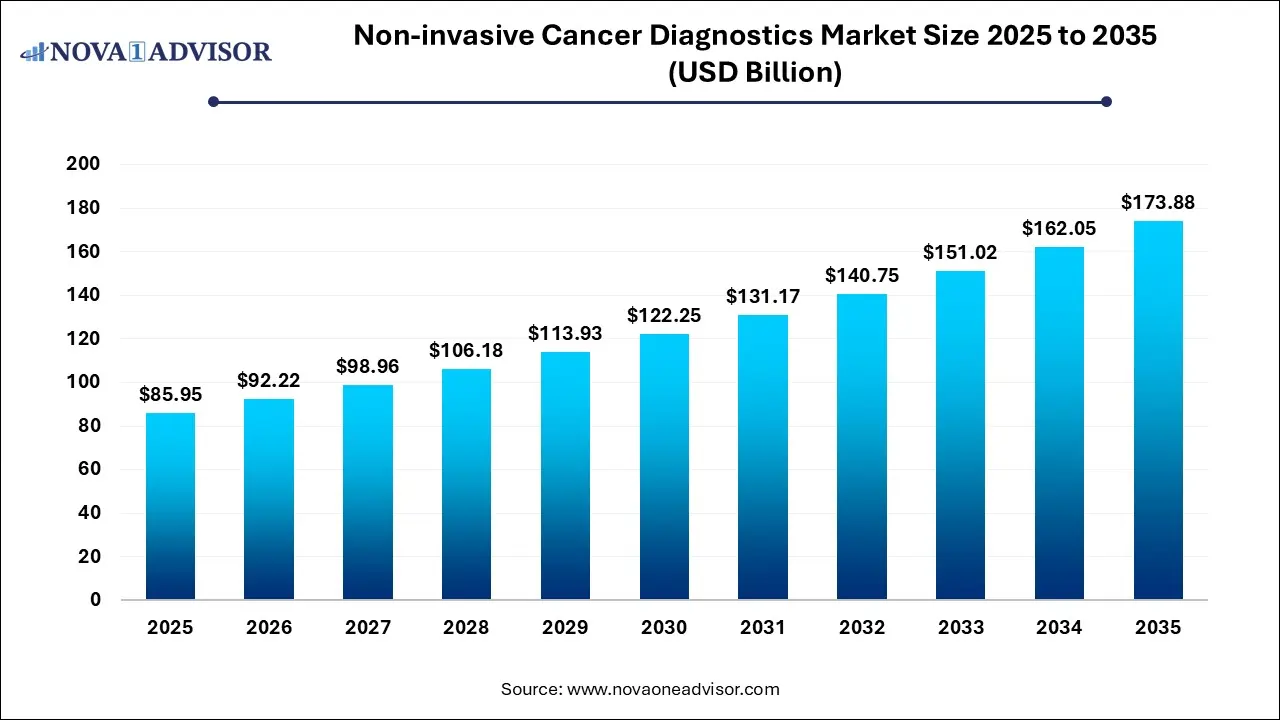
The non-invasive cancer diagnostics market size was estimated at USD 85.95 billion in 2025 and is projected to increase from USD 92.22 billion in 2026 to approximately USD 173.88 billion by 2035, growing at a CAGR of 7.3% from 2026 to 2035. The non-invasive cancer diagnostics market is driven by the escalating global incidence of cancer prevalence and aging demographics, integration of technological innovations and AI, and advancement in liquid biopsies.
Key Takeaways
- By product, the instruments segment held a dominant position in the market with a share of 45% in 2025.
- By product, the consumables segment is the fastest growing between 2026 and 2035.
- By technology, the imaging segment held a dominant position in the market with a share of 40% in 2025.
- By technology, the liquid biopsy segment is the fastest growing between 2026 and 2035.
- By indication, the lung cancer segment held a dominant position in the market with a share of 18% in 2025.
- By end use, the hospitals segment held a dominant position in the market with a share of 60% in 2025.
- By region, the North America region held a dominant position in the market with a share of 37% in 2025.
Innovation Driving Transformation in the Non-invasive Cancer Diagnostics Market
Non-invasive cancer diagnostics comprises advanced screening technologies, such as liquid biopsies and AI-integrated imaging, used to detect malignancies without surgical tissue excision. These methods offer major advantages, including reduced patient discomfort, lower risk of infection, and the ability to monitor tumor evolution more frequently. By enabling highly accurate, early-stage disease identification, they greatly improve treatment outcomes and support personalized medicine.
Non-invasive Cancer Diagnostics Market Trends
- Commercial Scalability of Liquid Biopsies
Liquid biopsies are transforming oncology by analyzing circulating tumor DNA and other biomarkers from a simple blood sample, rather than requiring surgical tissue removal. This technique allows for early detection, real-time monitoring of treatment efficacy, and surveillance for cancer recurrence in a highly minimally invasive manner.
- Market Penetration of Multi-Cancer Early Detection Panels
The significant industry shift toward MCED tests, which can screen for multiple deadly cancers simultaneously using a blood draw. These tests are becoming highly critical in catching asymptomatic tumors at their earliest, most treatable stages, thereby drastically improving patient survival rates.
- Expansion of Personalized and Precision Medicine
The growing focus on targeted and companion diagnostics requires highly specific genetic and molecular profiling. Non-invasive diagnostics enable doctors to map a patient’s exact tumor mutations, allowing for customized treatment plans that yield better clinical outcomes.
Key AI Integration in the Non-invasive Cancer Diagnostics Market
AI and ML are transforming noninvasive cancer diagnostics by identifying complex, early-stage disease markers that are imperceptible to the human eye. By analyzing massive datasets from sources such as liquid biopsies, medical imaging, and genomics, these technologies allow for much earlier and more accurate tumor detection. The computer vision and ML algorithms help automate diagnostics, reducing false positives, mitigating observational errors, and streamlining workflows for overworked radiologists.
Non-Invasive Cancer Diagnostics Market Report Scope
| Report Coverage | Details |
| Market Size in 2026 | USD 92.22 Billion |
| Market Size by 2035 | USD 173.88 Billion |
| Growth Rate From 2026 to 2035 | CAGR of 7.3% |
| Base Year | 2025 |
| Forecast Period | 2026 to 2035 |
| Segments Covered | Product, Technology, Indication, End use, Region |
| Market Analysis (Terms Used) | Value (USD Million/Billion) or (Volume/Units) |
| Regional Scope | North America; Europe; Asia Pacific; Central and South America; the Middle East and Africa |
| Key Companies Profiled | Abbott Laboratories; GE HealthCare; Siemens Healthineers AG; Koninklijke Philips N.V.; Canon Medical Systems; F. Hoffmann-La Roche Ltd; Illumina, Inc; Guardant Health, Inc.; Thermo Fisher Scientific Inc.; FONAR Corporation. |
Market Dynamics
Driver
Rising Global Cancer Prevalence
The necessity of accessible, population-scale screening solutions. With the global burden of cancer continuously expanding, healthcare systems are actively shifting toward minimally invasive and preventative technologies, such as liquid biopsies and AI-integrated imaging, to enable earlier detection and improve patient survival rates. Patients and oncologists increasingly prefer these non-invasive methods because they minimize physical discomfort, avoid surgical complications, and allow for real-time monitoring of tumor mutations.
Restraint
High Cost of Instruments
The market growth is hindered by the restricted widespread accessibility to healthcare facilities, particularly in low-and middle-income countries, due to the high cost of these expensive technologies. This lack of infrastructure forces smaller clinics and laboratories to rely on traditional, less accurate diagnostic methods or outdated equipment, limiting early cancer screening.
Opportunity
Liquid Biopsy and Minimally Residual Disease Testing
The shifting diagnostics from invasive, one-time tissue biopsies to highly sensitive, continuous blood testing. By detecting microscopic tumor DNA (ctDNA) remnants and actionable mutations, these non-invasive solutions enable oncologists to assess treatment efficacy and predict relapse long before symptoms or tumors appear on conventional imaging. This capability vastly expands the addressable market by allowing serial monitoring and highly personalized therapeutic adjustments throughout the entire patient journey.
Segment Insights
By Product Insights
Why Did the Instruments Segment Hold a 45% Share for the Non-invasive Cancer Diagnostics Market?
The instruments segment held a dominant position in the market with a share of 45% in 2025. Owing to its constant demand in hospitals and labs for diagnostic machinery. The shift toward precision oncology is accelerating institutional procurement, as diagnostic laboratories invest heavily in sophisticated machinery to meet the demand of detailed molecular mapping.
The consumables segment held a 33% share of the market in 2025, with the continuous consumption of specialized test kits and reagents forming a resilient, high-volume revenue model by single-use clinical requirements. The rising global cancer rates and an aging population, which mandate constant diagnostic screening and patient monitoring.
The kits & reagents segment held a 22% share of the market in 2025, due to the growing adoption but less frequent replacement than instruments/consumables. The rapid technological improvements, which prompt laboratories to frequently update their kits for better diagnostic precision.
By Technology Insights
Why Did the Imaging Segment Hold a 40% Share for the Non-invasive Cancer Diagnostics Market?
The imaging segment held a dominant position in the market with a share of 40% in 2025. Owing to the high accuracy and widespread use in clinical settings. The integration of artificial intelligence for image interpretation has drastically improved the speed and accuracy of scans, driving higher adoption rates among healthcare providers.
The liquid biopsy segment held a 35% share of the market in 2025, with the rapid adoption due to its minimally invasive benefits.The highly sensitive to minimal residual diseases, meaning they can detect tiny traces of tumor DNA long before a patient might show outward symptoms or show evidence on a traditional scan, allowing for quicker therapeutic interventions.
The immunoassay segment held a 25% share of the market in 2025, due to the commercial gold standard for cost-effective biomarker detection, identifying critical circulating tumor proteins via routine, minimally invasive blood draws. Its affordability makes it highly accessible for widespread population screening compared to extensive, complex molecular sequencing alternatives.
By Indication Insights
Why Did the Lung Cancer Segment Lead the Non-invasive Cancer Diagnostics Market?
The lung cancer segment registered its dominance over the market with a share of 18% in 2025, owing to high prevalence and mortality rates. Advanced technologies, such as blood-based liquid biopsies and fragmentomics, are successfully replacing risky, invasive tissue biopsies with highly accurate, cell-free DNA profiling.
The breast cancer segment held the 17% share of the market in 2025, with the routine screening programs and awareness. The availability of highly sensitive, pain-free alternatives, such as liquid biopsies, 3D mammography, molecular breast imaging, and contrast-enhanced MRI, has replaced invasive tissue biopsies.
The colorectal cancer segment held the 15% share of the market in 2025, due to the advanced stool-based DNA tests and blood-based assays, which significantly improve screening compliance by eliminating the discomfort and intensive preparation of traditional colonoscopes. The rapid molecular advancements have enabled these high-sensitivity tools to accurately detect precancerous polyps early, drastically lowering long-term medical costs and improving patient outcomes.
The prostate cancer segment held the 12% share of the market in 2025, with the industry shift toward traditional, false-positive-prone PSA tests toward highly specific genomic assays, urine-based biomarkers, and AI-driven multi-pandemic MRI is revolutionizing prostate cancer management. The integration of these tests into specialized outpatient facilitates ensure rapid turnaround times and cost-effectiveness, driving market expansion and long-term diagnostic accessibility.
The blood cancer segment held the 10% share of the market in 2025, owing to the commercial integration of next-generation sequencing, such as the ultra-fast PanHeme assay, which provides deep genetic mutation profiling in under 72 hours to optimize early intervention. These non-invasive molecular tools are clinically vital for tracking minimal residual disease and tailoring targeted immunotherapies without requiring repetitive, high-risk surgical procedures.
The liver cancer segment held the 9% share of the market in 2025, with the lower incidence in certain regions. The clinical expansion is heavily accelerated by global healthcare initiatives and favorable insurance coverage, solidifying liver cancer as a vital in the diagnostic market.
The cervical cancer segment held the 6% share of the market in 2025, due to the continuous technological innovation, including liquid-based cytology, mRNA testing, and AI-assisted digital pathology, which has drastically elevated diagnostic sensitivity while minimizing manual labor costs. These cost-effective, non-invasive screening innovations capture a resilient consumer base across both developed and emerging economies, maximizing population-wide compliance and market expansion.
The skin cancer segment held the 5% share of the market in 2025, with the lower testing frequency. Remote diagnostic platforms have made screening much more accessible to the general public, encouraging more patients to seek out early detection.
The others segment held the 8% share of the market in 2025, with the reflects a combined contribution of multiple rare indications. Advancements in wearable tech and user-friendly digital health platforms integrated with telehealth allow for better remote monitoring and have pushed the other segments to develop at a high compound annual growth rate.
By End Use Insights
Why Did the Hospitals Segment Lead the Non-invasive Cancer Diagnostics Market?
The hospitals segment registered its dominance over the market with a share of 60% in 2025, owing to high patient volume and comprehensive diagnostic facilities. Hospitals employ highly trained specialized oncologists and technicians necessary to interpret complex genomic and biomarker data.
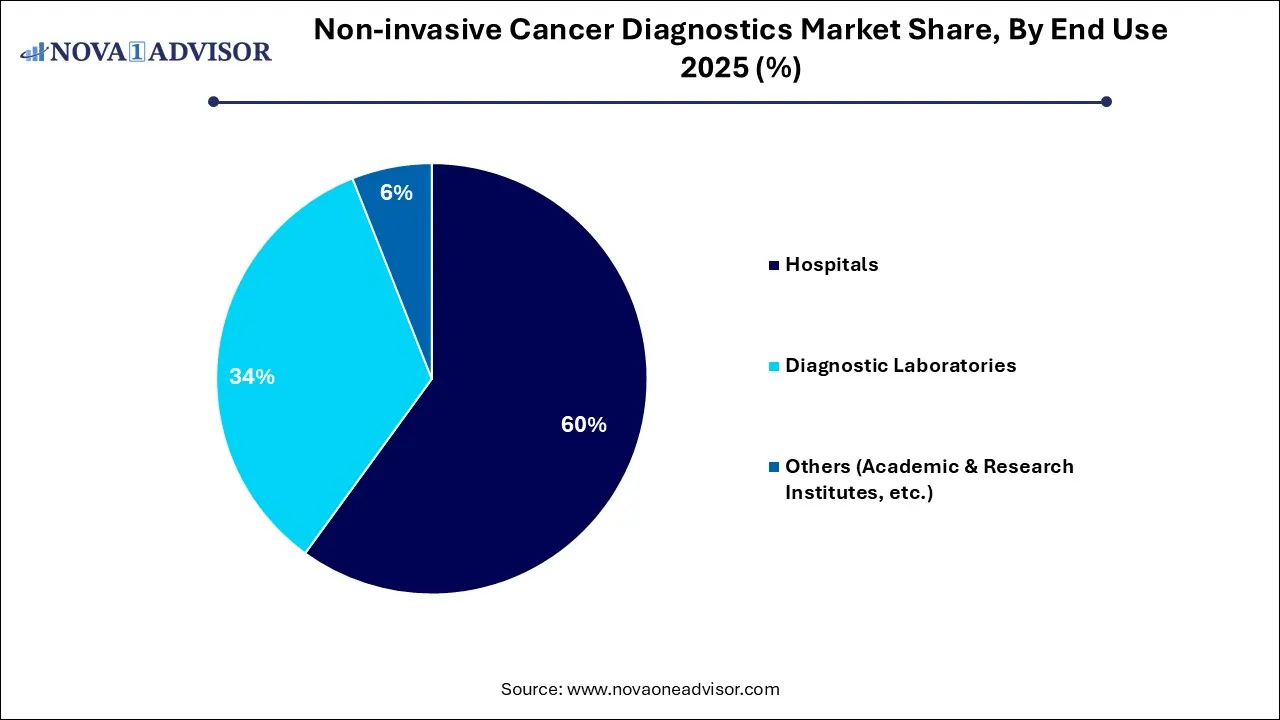
The diagnostic laboratories segment held the 34% share of the market in 2025, which reflects growing outsourcing of diagnostics. They possess the skilled staff and testing volumes required to meet the rapidly rising global demand for comprehensive cancer screening.
The Others segment held the 6% share of the market in 2025, due to the niche applications and lower volume. Creating consumer awareness around the importance of early detection has spurred the adoption of accessible, on-the-go diagnostic methods, fueling the market growth.
By Regional Insights
Why Did the North America Region Lead the Non-invasive Cancer Diagnostics Market?
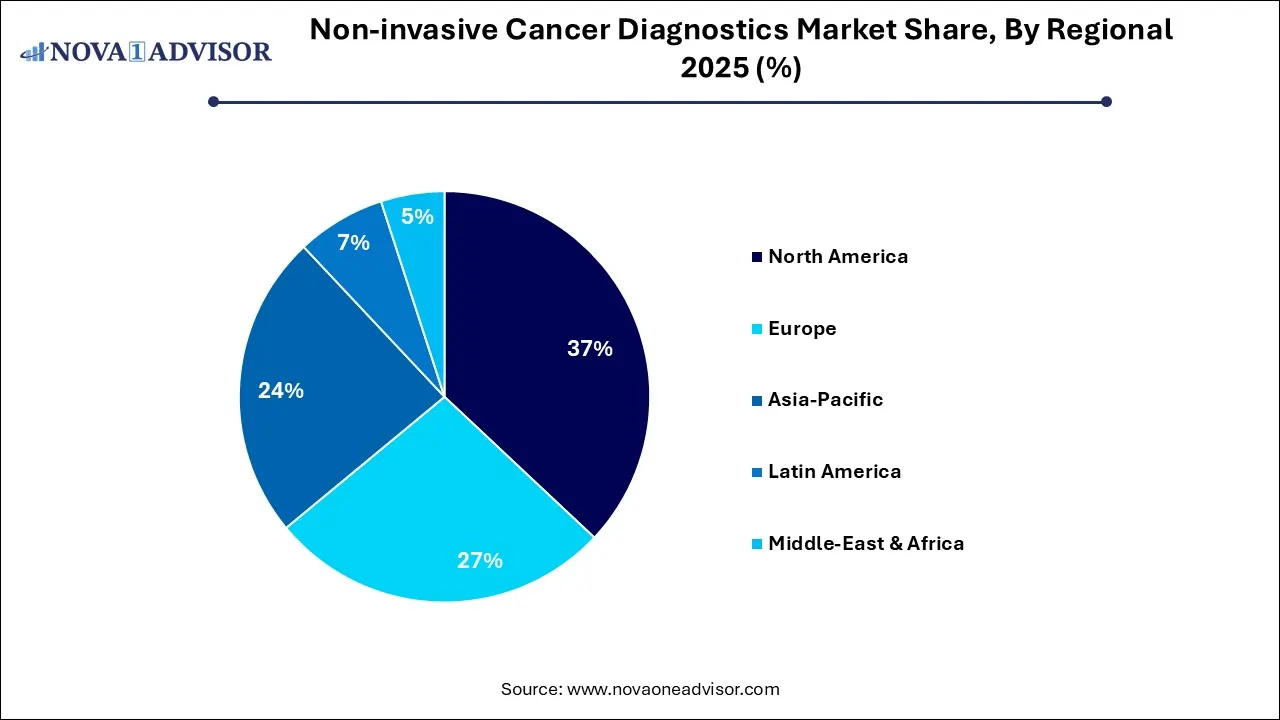
The North America region registered its dominance over the market with a share of 37% in 2025, owing to the advanced healthcare infrastructure and high R&D investment. The shift toward personalized medicine, preventative diagnostics for cancers, such as breast, lung, and prostate, has shifted clinical practice away from traditional surgical biopsies.
U.S. Surgical Suture Market Trends
The U.S.’s significant shift toward absorbable sutures, which dominate the sector by eliminating the logistical and financial costs of secondary removal procedures. The global surge in laparoscopic and robotic surgeries, which fuels institutional demand for specialized, high-precision automated suturing devices.
The Europe region held the 27% share of the market in 2025, due to the widespread screening programs and regulatory support. The strong clinical and patient preference for less painful, risk-managed diagnostic alternatives ensures high institutional adoption, establishing Europe as a high-margin, mature geography for non-invasive cancer diagnostics.
U.K. Surgical Suture Market Trends
The U.K. is experiencing accelerated institutional procurement as hospitals prioritize antibacterial-coated variations to mitigate costly surgical-site infections and optimize patient recovery timelines. An aging global demographic suffering from chronic conditions like diabetes ensures a high volume of surgical procedures, allowing market leaders, such as Ethicon, Medtronic, and Smith & Nephew, to capture consistent, high-margin revenue through continuous R&D.
The Asia Pacific segment held 24% share of the market in 2025, due to the rising incidence, expanding healthcare access, and market adoption. Increased adoption of advanced molecular diagnostics, such as next-generation sequencing and polymerase chain reaction, allows for highly accurate, personalized cancer profiling.
China Surgical Suture Market Trends
China’s rapid clinical adoption of endoscopic and robotic-assisted surgeries mandates specialized, smaller-diameter monofilaments and knotless barbed variations to optimize operating room efficiency and tension distribution. The healthcare providers are prioritizing advanced antibacterial-coated smart materials to actively mitigate costly surgical-site infections and reduce bacterial harboring in post-operative environments.
The Latin America region held 7% share of the market in 2025, with the clinical adoption of minimally invasive liquid biopsies and advanced imaging, which optimize patient outcomes by bypassing risky surgical procedures to chart personalized treatment paths. The substantial infrastructure investment in Brazil, Mexico, and Argentina is where regional oncology laboratories are aggressively upgrading their molecular diagnostic capabilities.
The MEA region held 5% share of the market in 2025, due to the increase in cancer cases, which has necessitated more efficient, mass-screening tools to manage patient populations. Growing patient preference for less painful alternatives is shifting clinical protocols away from traditional surgical biopsies.
Recent Developments
- In March 2026, Guardant Health launched its Shield multi-cancer detection blood test in Asia, partnering with Manulife to provide access in Hong Kong, Singapore, and the Philippines starting. The partnership aims to offer early detection for 10 common cancers in individuals aged 45 or older using a non-invasive, methylation-based screening tool.
- In April 2026, Guardant Health, Inc. (Nasdaq: GH), a global leader in precision oncology, officially announced the commercial rollout of its Shield™ multi-cancer detection (MCD) laboratory developed test (LDT) across multiple key markets in Asia. This geographical expansion is anchored by a first-of-its-kind exclusive insurance partnership with Manulife, a leading international financial services provider.
- In December 2025, ErlySign, a Nagpur-based biotechnology startup, has officially announced the successful completion of a large-scale, 1,000-patient multi-centre clinical trial for its proprietary salivary biomarker-based screening test. Following these validated clinical outcomes, the company is aggressively initiating the regulatory approval process with the Central Drugs Standard Control Organisation (CDSCO) ahead of its planned commercial market rollout.
Non-invasive Cancer Diagnostics Market Companies
- Abbott
- Illumina, Inc.
- Thermo Fisher Scientific, Inc.
- QIAGEN
- Agilent Technologies, Inc.
- F. Hoffmann-La Roche Ltd
- Quest Diagnostics Incorporated.
- Hologic, Inc.
- Merck KGaA
- BD.
- Novartis AG
- GSK plc.
- Lilly.
- Myriad Genetics, Inc.
- Pfizer, Inc.
Segments Covered in the Report
This report forecasts revenue growth at country levels and provides an analysis of the latest industry trends in each of the sub-segments from 2021 to 2035. For this study, Nova one advisor, Inc. has non-invasive cancer diagnostics market.
By Product
- Instruments
-
- Pathology-based Instruments
-
-
- Polymerase Chain Reaction (PCR) Instruments
- Next-generation Sequencing (NGS) Instruments
- Microarrays
-
-
- Imaging Instruments
-
-
- Magnetic Resonance Imaging (MRI)
- Computed Tomography (CT)
- Positron Emission Tomography (PET)
- Mammography
- Others (Ultrasound, etc.)
-
- Consumables
- Kits & Reagents
By Technology
- Imaging
- Liquid Biopsy
- Immunoassay
By Indication
- Lung Cancer
- Breast Cancer
- Colorectal Cancer
- Prostate Cancer
- Blood Cancer
- Liver Cancer
- Cervical Cancer
- Skin Cancer
- Others (Thyroid Cancer, etc.)
By End Use
- Hospitals
- Diagnostic Laboratories
- Others (Academic & Research Institutes, etc.)
By Regional
- North America
-
- U.S.
- Canada
- Mexico
- Europe
-
- UK
- Germany
- France
- Italy
- Spain
- Asia Pacific
-
- Japan
- China
- India
- Australia & New Zealand
- South Korea
- Latin America
-
- Brazil
- Argentina
- Middle East & Africa
-
- South Africa
- Saudi Arabia
- UAE

Proceed to Buy
Instant PDF delivery on confirmation

Non-invasive Cancer Diagnostics Market Size to Hit USD 173.88 Billion by 2035
 Request Customization
 Download Sample

Get a Sample of this Report
Non-invasive Cancer Diagnostics Market