

Stem Cells Market (By Product; By Application; By Technology; By Therapy; By End Use; By Region) - Global Industry Analysis, Share, Growth, Regional Outlook and Forecasts, 2026-2032
 Status Published
 Category Healthcare


Content
Stem Cells Market Size, Share and Trends 2026 to 2035
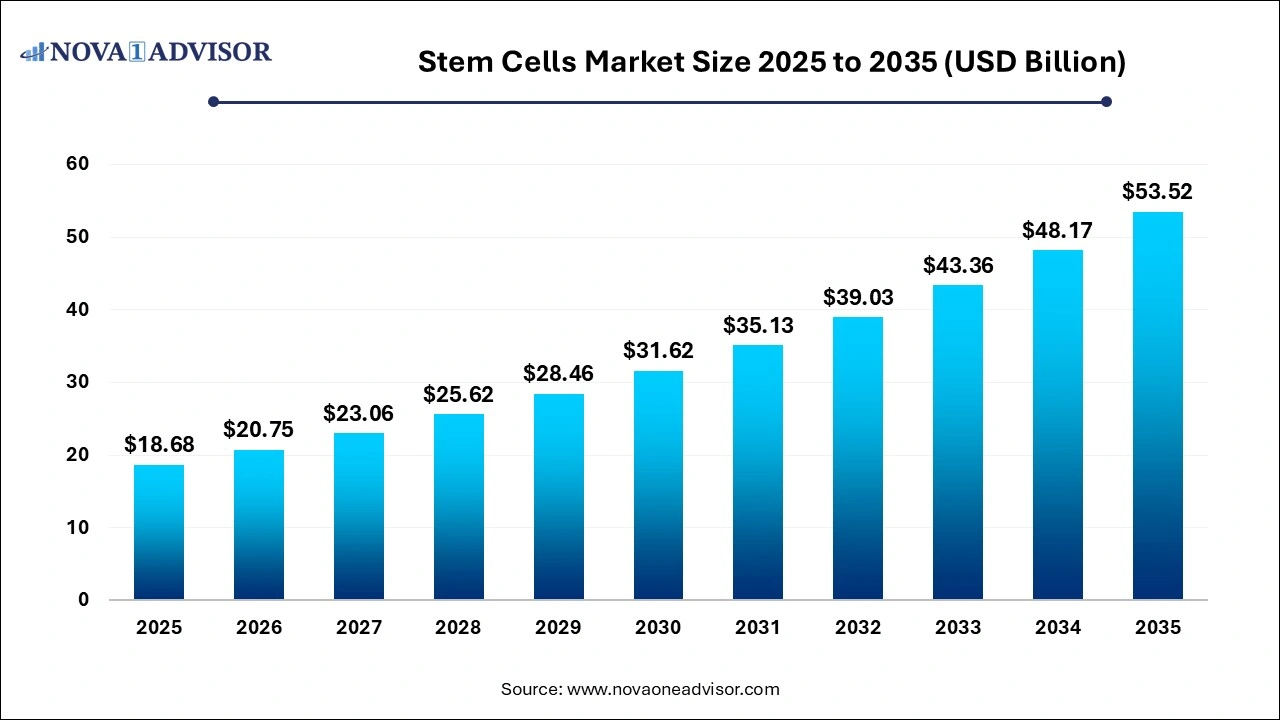
The global stem cells market size was exhibited at USD 18.68 billion in 2025 and is projected to hit around USD 53.52 billion by 2035, growing at a CAGR of 11.10% during the forecast period 2026 to 2035.
Stem Cells Market Key Pointers:
- The adult stem cells segment dominated the market and accounted for the largest revenue share of 83.5% in 2025.
- The clinical trials on stem cell therapies targeting various diseases have resulted in regenerative medicine segment capturing the largest market share of 91.01% in 2025.
- The cell acquisition segment captured the highest revenue share of 35.9% in 2025.
- The allogenic therapy segment captured the largest revenue share of 60.2% in 2025
- The pharmaceutical and biotechnology companies segment captured the largest revenue share of 53.7% in 2025.
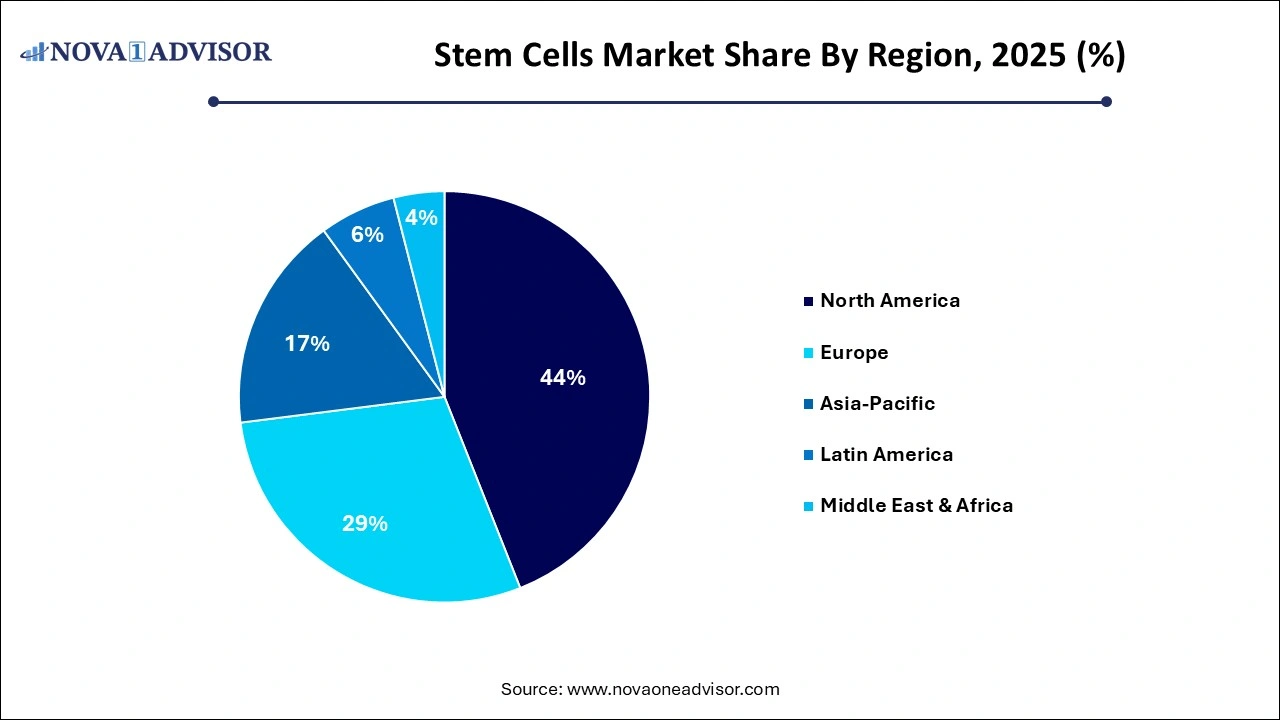
- North America dominated the highest market share of 44.8% in 2025.
Stem cells Market Report Scope
| Report Coverage | Details |
| Market Size in 2026 | USD 20.75 Billion |
| Market Size by 2035 | USD 53.52 Billion |
| Growth Rate from 2026 to 2035 | CAGR of 11.10% |
| Base Year | 2025 |
| Forecast Period | 2026 to 2035 |
| Segments Covered | By Product, By Application, By Technology, By Therapy, By End-use |
| Regions Covered | North America, Europe, Asia-Pacific, Latin America and Middle East & Africa |
Stem cells are cells that can differentiate into a variety of other cells, eventually forming organs or tissues. Many studies have been conducted over the years to assess the true potential of stem cells, leading to a variety of applications in the fields of genetic disease treatment, neurological disorders, oncology, and organ regeneration. The market is driven by the rising number of banks, growing focus on increasing therapeutic potential of these products, and extensive research for the development of regenerative medicines, among other factors.
The growing focus on regenerative therapies is fueling market expansion. iPSCs are becoming increasingly popular for the creation of customized cellular therapies, and opening up new possibilities in regenerative medicine. For instance, in September 2020, researchers from Duke-NUS and Monash University discovered the first stem cell that can aid in the treatment of placenta issues during pregnancy. The researchers devised a new method for producing induced trophoblast stem cells that can be used to generate placenta cells. The research will aid in the development of an in-vitro human placenta model and pave the way for future therapies.
Stem Cells Market Segment Insights
By Product Insights
How did the adult stem cell segment dominate the Stem Cells market?
The adult stem cell segment is driven by their established clinical record in treating blood and orthopedic disorders while avoiding the ethical controversies of embryonic research. Their high safety profile, particularly in autologous therapies, ensures low immune rejection and high commercial adoption across global healthcare systems. While they remain the current revenue leaders, the segment is evolving through cryopreservation advancements that facilitate more cost-effective, standardized treatments.
How did the induced pluripotent stem cells segment expect to hold the fastest-growing Stem Cells market in the coming years?
The induced pluripotent stem cells segment is driven by offering the versatility of embryonic cells without the associated ethical constraints. Their unique ability to create patient-specific disease models has made them indispensable for personalized medicine and advanced drug discovery efforts. Driven by automated production techniques and increasing public-private investments, iPSCs are rapidly transitioning from research tools to viable therapeutic platforms for chronic conditions.
By Application Insights
How did the regenerative medicine segment account for the largest share in the Stem Cells market?
The regenerative medicine segment is driven by the rising global burden of chronic illnesses like diabetes and heart disease. The sector's leadership is reinforced by a massive volume of clinical trials and the high therapeutic demand for Mesenchymal Stem Cells (MSCs) to treat neurological and oncological conditions. Robust public and private funding continues to accelerate the transition of these lab-based discoveries into standardized, life-saving therapies.
How did the drug discovery and development segment expect to hold the fastest-growing Stem Cells market in the coming years?
The drug discovery and development segment, driven by providing patient-specific molecular phenotypes, enables high-throughput screening that significantly reduces preclinical costs and accelerates drug timelines. This growth is further propelled by massive biotech and pharmaceutical investments in cell-based assays through strategic partnerships with Contract Research Organisations (CROs). Ultimately, the shift toward these predictive, human-centric models is making drug discovery the most dynamic and fastest-growing application in the stem cell market.
By Technology Insights
How did the cell acquisition segment account for the largest share in the Stem Cells market?
The cell acquisition segment is driven by the foundational step for both clinical transplants and the expanding cell banking industry. Techniques such as apheresis and bone marrow harvesting are seeing sustained demand to support the rise in personalized, autologous therapies that minimize immune rejection. The sector's leadership is further solidified by advancements in bio-preservation, ensuring that high-quality stem cells are readily available for a wide range of regenerative treatments.
How did the cell production segment expect to hold the fastest-growing Stem Cells market in the coming years?
The cell production segment is driven by a critical shift toward automated, closed-system bioreactors that ensure GMP compliance and scalability. The surge in iPSC-based clinical trials is driving unprecedented demand for specialized manufacturing infrastructure that reduces contamination risks and labor costs. Rapid industrial expansion, particularly across the Asia-Pacific region, further accelerates the adoption of these high-throughput production technologies.
By Therapy Insights
How did the autologous segment account for the largest share in the Stem Cells market?
The autologous segment is driven by its superior safety profile and minimized risk of immune rejection. The widespread clinical adoption of CAR-T cell therapies for oncology, combined with advancements in peripheral blood harvesting, has cemented its high revenue status. The expanding use in treating autoimmune and musculoskeletal disorders. Ultimately, these personalized treatments provide the most reliable and effective pathway for targeted regenerative medicine today.
How did the allogeneic segment expect to hold the fastest-growing Stem Cells market in the coming years?
The allogeneic segment is emerging as a primary growth driver, fueled by utilizing CRISPR-Cas9 gene editing to create hypoimmunogenic cells. Manufacturers are effectively overcoming historical immune rejection barriers and Graft-versus-Host Disease (GVHD). The shift toward iPSC-derived products further enhances this growth, providing a consistent and cost-effective source for treating high-prevalence hematologic and autoimmune disorders.
By End-User Insights
How did the pharmaceutical and biotechnology segment account for the largest share in the Stem Cells market?
The pharmaceutical and biotechnology segment is driven by leveraging massive R&D investments to commercialize advanced therapies for cardiovascular and autoimmune diseases. Their leadership is sustained by high-capacity, GMP-compliant manufacturing infrastructures, including automated bioreactors that ensure the scalable production of high-purity cell lines. Through strategic alliances and mergers, these firms accelerate the transition of laboratory breakthroughs into standardized medical products to meet the rising global demand for regenerative medicine.
How did the Academic & Research Institutes segment expect to hold the fastest-growing Stem Cells market in the coming years?
The Academic & Research Institutes segment is driven by serving as the primary engine for 3D disease modeling and high-throughput drug screening. These institutions provide the foundational data required to de-risk early-stage clinical materials. Their growth is further accelerated by strategic industry-academia collaborations that utilize pilot-scale GMP suites to bridge the gap between laboratory discovery and commercial application. Ultimately, this segment's rapid expansion reflects the global shift toward personalized medicine and the critical need for sophisticated, research-grade stem cell lines.
Regional Insights
North America accounted for the largest revenue share of 44% in 2025. Presence of innovators and key market players has resulted into higher penetration of market products in the region. North America leads the market owing to strong biotechnology industry, presence of key players, extensive R&D and promotion of personalized medicines. The region accounts for the highest revenue share. Moreover, growth in this region can be further attributed to rising government initiative for promoting stem cell therapies. For instance, in March 2020, the government of Canada invested around USD 7 million in regenerative medicine and stem cell research. It will support 9 transnational projects and 4 clinical trials in the country for growing regenerative medicine sector
Some of the prominent players in the Stem cells Market include:
- Advanced Cell Technology Inc.
- STEMCELL Technologies Inc.
- Cellular Engineering Technologies Inc.
- CellGenix GmbH
- PromoCell GmbH
- Kite Pharma
- Lonza
- Cellartis AB
- Angel Biotechnology
- Brainstorm Cell Therapeutics
- Celgene Corporation
- Osiris Therapeutics
- Genea Biocells
- Bioheart Inc.
- Waisman Biomanufacturing
- Tigenix
- Caladrius Biosciences
- Gamida Cell
Segments Covered in the Report
This report forecasts revenue growth at global, regional, and country levels and provides an analysis of the latest industry trends in each of the sub-segments from 2026 to 2035. For this study, Nova one advisor, Inc. has segmented the global stem cells market.
By Product
- Adult Stem Cells (ASCs)
- Hematopoietic
- Mesenchymal
- Neural
- Epithelial/Skin
- Others
- Human Embryonic Stem Cells (HESCs)
- Induced Pluripotent Stem Cells (iPSCs)
- Very Small Embryonic Like Stem Cells
By Application
- Regenerative Medicine
- Neurology
- Orthopedics
- Oncology
- Hematology
- Cardiovascular and Myocardial Infraction
- Injuries
- Diabetes
- Liver Disorder
- Incontinence
- Others
- Drug Discovery And Development
By Technology
- Cell Acquisition
- Bone Marrow Harvest
- Umbilical Blood Cord
- Apheresis
- Cell Production
- Therapeutic Cloning
- In-vitro Fertilization
- Cell Culture
- Isolation
- Cryopreservation
- Expansion And Sub-Culture
By Therapy
- Autologous
- Allogenic
By End-user
- Pharmaceutical & Biotechnology Companies
- Hospitals & Cell Banks
- Academic & Research Institutes
By Region
- North America
- Europe
- Asia-Pacific
- Latin America
- Middle East & Africa (MEA)
FAQ's

Proceed to Buy
Instant PDF delivery on confirmation

 Request Customization
 Download Sample

Get a Sample of this Report
Stem Cells Market