

Glycomics / Glycobiology Market Size, Share, Forecast Report, 2026-2035
 Status Published
 Category Healthcare


Content
Glycomics / Glycobiology Market Size, Growth and Trends 2026 to 2035
The global glycomics / glycobiology market size was estimated at USD 2.76 billion in 2025 and is expected to reach USD 11.46 billion by 2035, growing at a CAGR of 15.3% from 2025 to 2035.
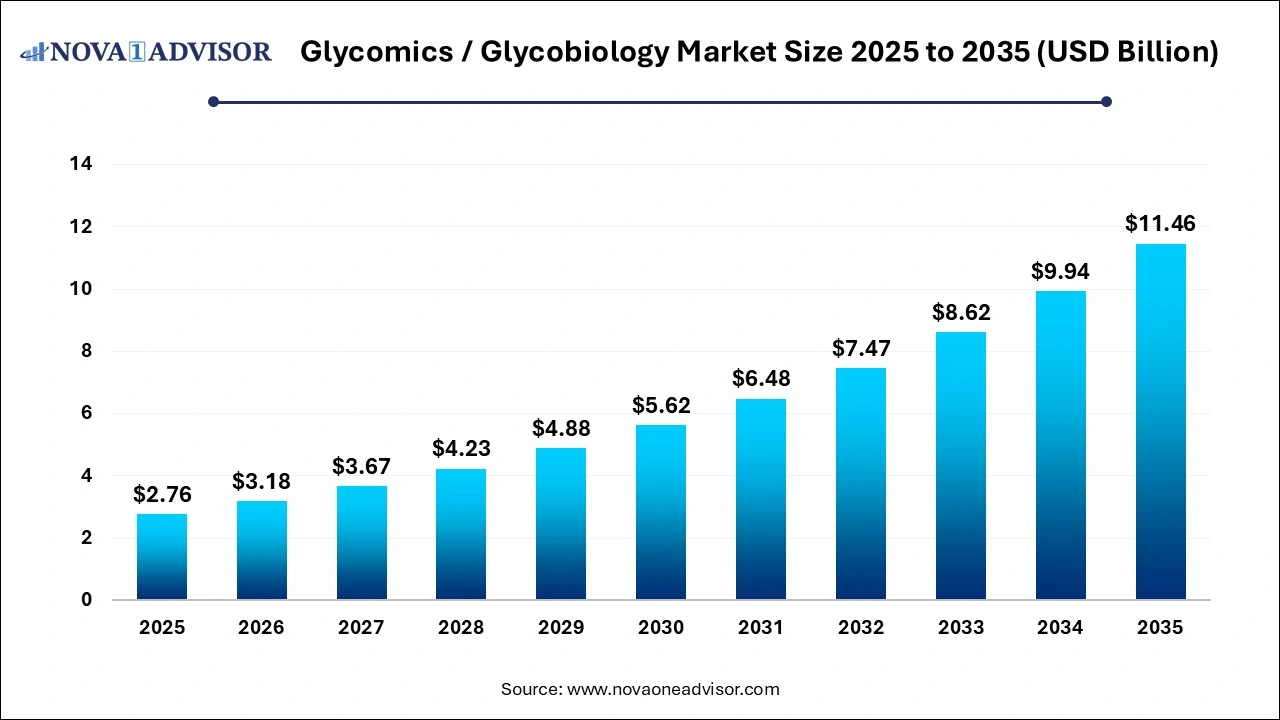
Glycomics / Glycobiology Market Outlook
- Market Growth Overview: The glycomics/glycobiology market is expected to grow significantly between 2026 and 2035, driven by the growing pharmaceutical research and developments, innovation in high-performance technology, and growing disease biomarker discovery.
- Sustainability Trends: Sustainability trends involve green chemistry and automation, eco-friendly research and research, and drug discovery efficiency.
- Major Investors: Major investors in the market include Thermo Fisher Scientific, Merck KGaA, Agilent Technologies, New England Biolabs, and Waters Corporation.
Glycomics / Glycobiology Market Report Scope
| Report Coverage | Details |
| Market Size in 2026 | USD 3.18 Billion |
| Market Size by 2035 | USD 11.46 Billion |
| Growth Rate From 2026 to 2035 | CAGR of 15.3% |
| Base Year | 2025 |
| Forecast Period | 2026 to 2035 |
| Market Analysis (Terms Used) | Value (USD Million/Billion) or (Volume/Units) |
| Segments Covered | By Product, By Application, By End-User |
| Regional Scope | North America; Europe; Asia Pacific; Central and South America; the Middle East and Africa |
| Key Companies Profiled | Merck KGaA, Agilent Technologies, Thermo Fisher Scientific, New England Biolabs (NEB) |
Glycomics / Glycobiology Market Segmental Insights
By Product Insights
How did the Enzymes Segment Dominate the Glycomics / Glycobiology Market?
The enzymes segment is driven by the essential role of glycosidases and transferases in cutting and analyzing complex glycans for pharmaceutical research and development. Its high consumable nature, generating consistent recurring revenue through repetitive laboratory use. With the increased research funding and advancements in enzyme engineering, these biological tools remain the fundamental requirement for the growing field of personalized medicine and glycan-based drug discovery.
How did the Instruments Segment Expect to Hold the Fastest-Growing Glycomics / Glycobiology Market in the Coming Years?
The instruments segment is driven by the breakthroughs in high-throughput mass spectrometry and automated LC-MS systems that enhance structural characterization. The integration of AI-driven analytics and user-friendly automation is streamlining complex glycan profiling, making it indispensable for monitoring critical quality attributes in biopharmaceutical pipelines.
By Application Insights
How did the Drug Discovery and Development Segment Account for the Largest Share in the Glycomics / Glycobiology Market?
The drug discovery and development segment is driven by the massive research and development investments and its critical role in characterising therapeutic proteins and vaccines. The rising demand for glycan biomarkers in oncology and infectious diseases research is essential for identifying new drug targets. With advanced mass spectrometry and strategic industry-academic collaborations, these applications remain the primary engine for high-value biopharmaceutical innovation and personalized medicine.
How did the Disease Diagnostics Segment Expect to Hold the Fastest-Growing Glycomics / Glycobiology Market in the Coming Years?
The disease diagnostics segment is driven by the high-throughput analytical tools and AI integration, which simplify the structural identification of altered sugar patterns. As personalized medicine gains traction, these diagnostic assays are becoming essential for patient stratification and tailoring individual therapeutic responses, supported by increasing strategic investments and academia-industry partnerships.
By End-User Insights
How did the Academic and Research Institutes Segment Account for the Largest Share in the Glycomics / Glycobiology Market?
The academic and research institute segment is driven by the primary hubs for government-funded glycobiology projects and fundamental disease research. The widespread adoption of specialized analytical tools and kits is required to map complex glycan pathways in oncology and immunology. The robust strategic collaboration with the biopharmaceutical industry, these institutions serve as the essential engine for translating basic glycan discovery into next-generation therapeutic innovations.
How did the Pharmaceutical and Biotechnology Companies Segment Expect to Hold the Fastest-Growing Glycomics / Glycobiology Market in the Coming Years?
The pharmaceutical and biotechnology companies segment is driven by the regulatory push for robust validation and the high-volume consumption of specialized reagents and enzymes for large-scale production. Through strategic collaboration, such as that between bridgeBio and GlycoNet, companies are rapidly translating glycan-related biomarkers into targeted, personalized therapies for chronic diseases.
Key Players in the Glycomics / Glycobiology Market
- Merck KGaA: Merck KGaA contributes to the glycomics market by offering a broad portfolio of GlycoProfile kits and high-purity glycosidases (including PNGase Fast) used for the rapid release and sequencing of glycans from glycoproteins.
- Agilent Technologies: Agilent provides a comprehensive portfolio for glycan analysis, including chromatography systems, AdvanceBio columns, and specific reagents for labeling, such as InstantPC.
- Thermo Fisher Scientific: Thermo Fisher Scientific holds a leading position by providing high-throughput mass spectrometry instruments and specialized kits for glycan profiling in drug development.
- New England Biolabs (NEB): New England Biolabs is a major supplier of recombinant glycosidases, including endoglycosidases and exoglycosidases, which are utilized for the structural analysis and modification of glycans.
Segments Covered in the Report
By Product
- Enzymes
- Glycosidases & Neuramidases
- Glycosyltransferases & Sialytransferases
- Other Enzymes (Carbohydrate kinases, carbohydrate sulfotransferases, protein sulfotransferases, and sulfatases)
- Instruments
- Mass Spectrometry Instruments
- Chromatography Instruments
- Arrays
- Other Instruments (electrophoresis instruments, NMR instruments, and HPLC columns)
- Kits
- Glycan Releasing Kits
- Glycan Labeling Kits
- Glycan Purification Kits
- Other Kits (glycan detection kits, glycan enrichment kits, and glycan sample preparation kits)
- Carbohydrates
- Oligosaccharides
- Monosaccharides
- Other Carbohydrates (rare sugars, glycoproteins, glycolipids, and glycol peptides)
- Reagents & Chemicals
By Application
- Drug Discovery & Development
- Disease Diagnostics
- Other Applications (virology, cell biology, and microbiology)
By End-user
- Academic Research Institutes
- Pharmaceutical and Biotechnology Companies
- Clinical Laboratories
By Region
- North America
- US
- Canada
- Europe
- Germany
- France
- UK
- Italy
- Spain
- Rest of Europe
- Asia Pacific
- China
- Japan
- India
- Australia
- Rest of Asia Pacific
- Rest of the World
- Latin America
- Brazil
- Mexico
- Rest of Latin America
- Latin America
- Middle East & Africa

Proceed to Buy
Instant PDF delivery on confirmation

Glycomics / Glycobiology Market Size to Exceed USD 11.46 Bn by 2035
 Request Customization
 Download Sample

Get a Sample of this Report
Glycomics / Glycobiology Market