

High-Performance Liquid Chromatography (HPLC) Market Size, Share, and Trends 2026 to 2035
 Status Published
 Category Healthcare


Content
High-Performance Liquid Chromatography (HPLC) Market Size and Growth 2026 to 2035
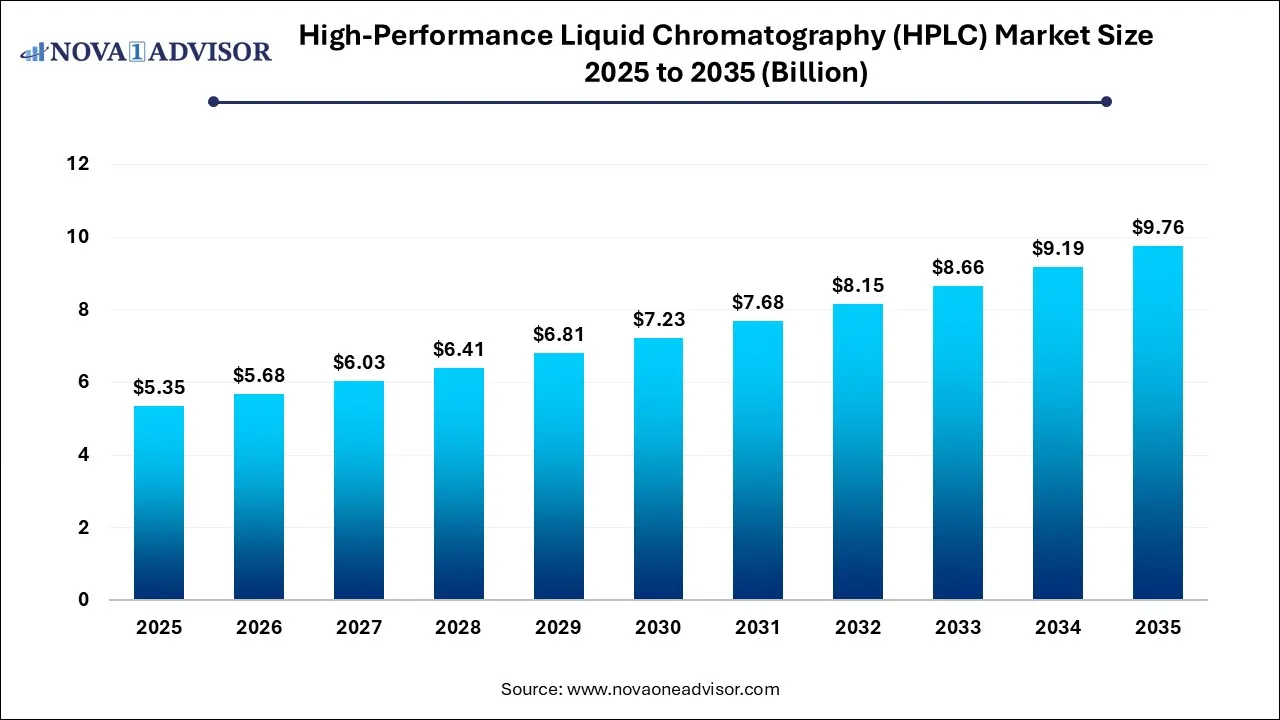
The global high-performance liquid chromatography market size was valued at USD 5.35 billion in 2025 and is projected to grow from USD 5.68 billion in 2026 to USD 9.76 billion by 2035, at a CAGR of 6.2% from 2026 to 2035.
Key Takeaway
- By product, the instruments segment dominated the market and accounted for the largest revenue share in 2025.
- By product, the consumables and accessories segment is the fastest-growing in the market in 2025.
- By application, the clinical research application segment dominated the market and accounted for the largest revenue share in 2025.
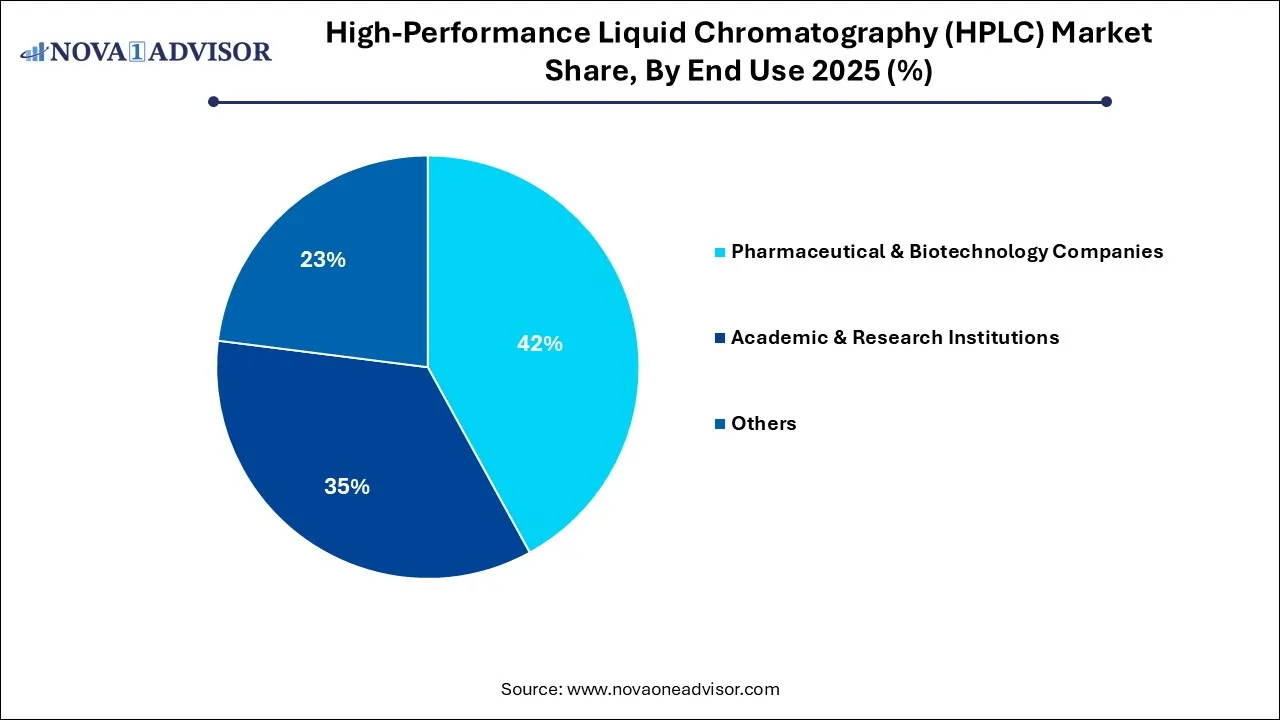
- By end use, the pharmaceutical and biotechnology companies segment dominated the market and accounted for the largest revenue share of 42.0% in 2025.
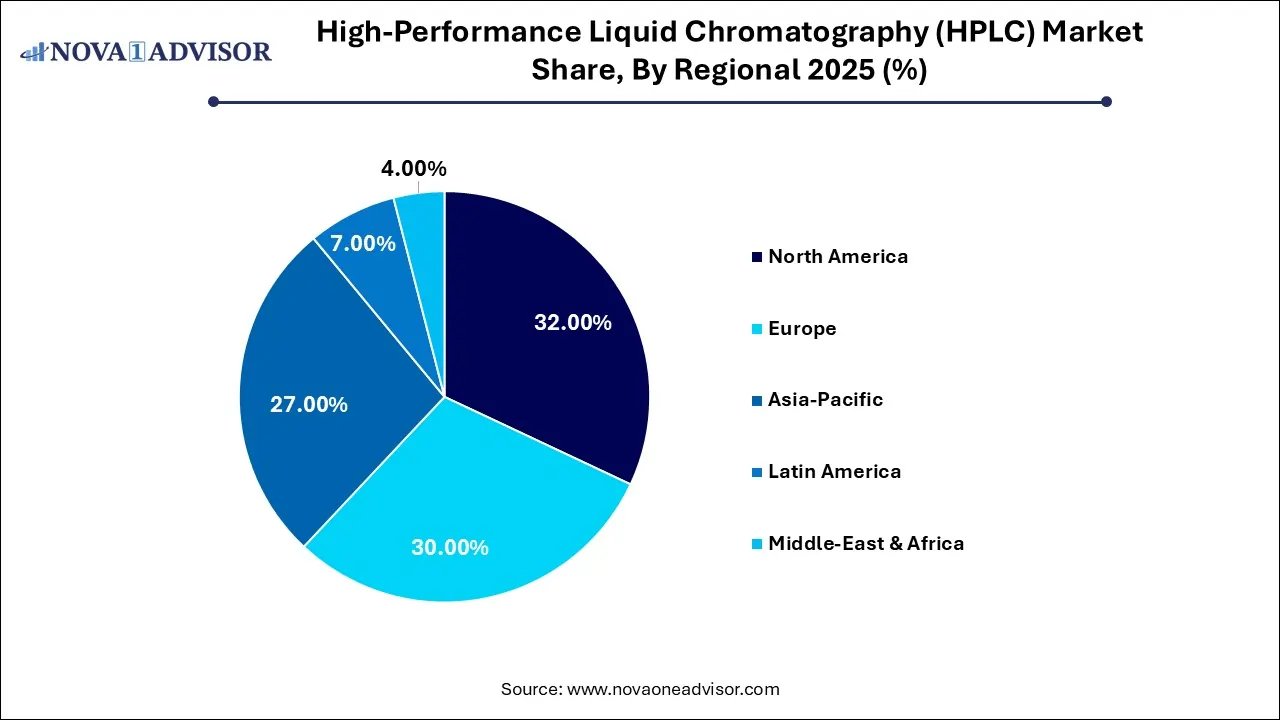
- By region, North America accounted for the largest revenue share of 32.0% in 2025.
Market Overview
The High-performance Liquid Chromatography (HPLC) market is experiencing steady growth, driven by rising demand for precise analytical technologies across pharmaceuticals, biotechnology, food testing, environmental analysis, and clinical diagnostics. HPLC remains a critical tool for separating, identifying, and quantifying complex compounds with high accuracy, making it essential for drug development, quality control, and regulatory compliance. Increasing investments in biologics, biosimilars, personalized medicine, and advanced diagnostics are further strengthening market demand. Technological advancements such as automation, AI-powered method optimization, cloud-enabled chromatography data systems, and HPLC–mass spectrometry integration are improving laboratory efficiency and analytical performance. Additionally, expanding applications in food safety, environmental monitoring, and biomarker research continue to create new growth opportunities for the global HPLC market.
Market Outlook
- Market Growth Overview: The global (High-Performance Liquid Chromatography) HPLC market is expected to grow significantly between 2025 and 2035, driven by the rising pharmaceutical and biotechnology research and development, increasing shift toward biopharmaceutical complexity, and stringent regulatory guidelines.
- Sustainability Trends: Sustainability trends involve eco-friendly solvents, miniaturization and micro-HPLC, and solvent recycling systems.
- Major Investors: Major investors in the market include Waters Corporation, Agilent Technologies, Thermo Fisher Scientific, Shimadzu Corporation, and Danaher Corporation.
How is AI Impacting the Global (High-Performance Liquid Chromatography) HPLC Market?
AI and ML are rapidly transforming the global high-performance liquid chromatography (HPLC) industry by automating labor-intensive method development and streamlining complex data interpretation. Machine learning algorithms significantly accelerate chromatographic optimization by predicting retention times, optimizing gradient conditions, and rapidly screening optimal columns without extensive trial-and-error. The deep learning techniques enhance peak deconvolution and impurity identification, allowing for highly accurate analysis of complex biological and environmental samples. These smart software advancements and predictive maintenance features improve laboratory throughput and reliability, driving substantial market growth across pharmaceutical and biotechnology sectors.
Major Market Trends
- Rising adoption of Ultra High Performance Liquid Chromatography (UHPLC) for faster, high-resolution analysis.
- Increasing integration of HPLC with mass spectrometry (LC-MS) for complex molecular characterization.
- Growing demand for biologics, biosimilars, and peptide-based therapeutics.
- Expansion of laboratory automation and robotic sample preparation.
- Adoption of AI-driven chromatographic method development and predictive maintenance.
- Increasing use of cloud-based chromatography data management systems.
- Focus on sustainable chromatography with lower solvent consumption.
- Growing demand for compact and modular HPLC systems.
- Expansion of CROs and CDMOs supporting pharmaceutical R&D.
- Rising investments in precision medicine, metabolomics, and proteomics research.
High-Performance Liquid Chromatography (HPLC) Market Report Scope
| Report Coverage | Details |
| Market Size in 2026 | USD 5.68 Billion |
| Market Size by 2035 | USD 9.76 Billion |
| Growth Rate From 2026 to 2035 | CAGR of 6.2% |
| Base Year | 2025 |
| Forecast Period | 2026 to 2035 |
| Segments Covered | Product, Application, End-use, Region |
| Market Analysis (Terms Used) | Value (USD Million/Billion) or (Volume/Units) |
| Regional Scope | North America; Europe; Asia Pacific; Central and South America; the Middle East and Africa |
| Key Companies Profiled | Waters Corporation; Thermo Fisher Scientific, Inc.; Agilent Technologies, Inc.; Shimadzu Corporation; Sartorius AG; PerkinElmer, Inc.; Bio-Rad Laboratories, Inc.; Merck KGaA; Tosoh Bioscience GmbH; Gilson, Inc.; Danaher Corporation |
Market Driver
Growing Pharmaceutical and Biopharmaceutical R&D
The expansion of pharmaceutical and biopharmaceutical research is a major driver of the HPLC market. HPLC is widely used throughout drug discovery, formulation development, manufacturing, and quality control to analyze active ingredients, detect impurities, and ensure regulatory compliance. The growing development of biologics, vaccines, biosimilars, and personalized medicines continues to increase demand for advanced chromatographic systems across pharmaceutical and biotechnology laboratories.
Market Restraint
High Cost and Technical Complexity
The high initial cost of HPLC systems, along with recurring expenses for columns, solvents, maintenance, and software, remains a key challenge. In addition, operating and validating HPLC instruments requires skilled professionals, making adoption difficult for smaller laboratories and budget-constrained research institutions.
Market Opportunity
Growing Precision Medicine and Clinical Diagnostics
The shift toward precision medicine and advanced diagnostics presents significant opportunities for the HPLC market. Increasing use of HPLC in biomarker analysis, therapeutic drug monitoring, hormone testing, metabolomics, and companion diagnostics is driving demand for highly accurate analytical platforms. Continued investments in personalized healthcare and translational research are expected to support long-term market growth.
Segmental Insights
By Product
Why did the instruments segment dominate the Global (High-Performance Liquid Chromatography) HPLC market?
The instruments segment is driven by the advanced, automated, and integrated UHPLC systems for drug development and regulatory compliance. The superior separation and resolution, coupled with technological updates from older equipment, make initial instrument purchases fuel the market growth.
How did the consumables and accessories segment expected to hold the fastest-growing Global (High-Performance Liquid Chromatography) HPLC market in the coming years?
The consumables and accessories segment is driven by the growing pharmaceutical, biotechnology, and food testing applications that require constant operation and high-throughput workflows, resulting in rapid wear and tear of consumables. The rapid demand for the analysis of biologics and complex chemical materials requires advanced filtration accessories to protect expensive HPLC columns from particulate contamination.
By Application
Clinical Research Applications Dominated the High-performance Liquid Chromatography Market
Clinical research applications held the largest share of the HPLC market because chromatography plays a fundamental role in drug development, biomarker discovery, pharmacokinetic studies, metabolomics, toxicology, and therapeutic drug monitoring. Every stage of pharmaceutical research relies on highly accurate analytical techniques to evaluate drug purity, metabolic pathways, formulation stability, and biological interactions. HPLC enables researchers to separate complex biological samples with exceptional precision, making it one of the most widely used analytical techniques in preclinical and clinical investigations. The continuous growth of precision medicine, biologics, biosimilars, and advanced therapeutics further reinforces demand for HPLC in clinical research environments.
The increasing number of global clinical trials also contributes significantly to segment dominance. Contract research organizations (CROs), academic medical centers, biotechnology companies, and pharmaceutical firms require validated chromatographic methods to support regulatory submissions and ensure data reliability. HPLC is routinely employed for analyzing plasma samples, monitoring drug concentrations, identifying metabolites, and validating bioanalytical methods. As governments and private organizations continue investing in life science research, clinical laboratories are expanding their analytical capabilities through the acquisition of advanced HPLC systems, thereby maintaining this segment's leadership position.
Diagnostic Applications are Expected to be the Fastest-Growing Segment
Diagnostic applications are projected to experience the fastest growth due to increasing demand for highly accurate laboratory diagnostics supporting personalized medicine and chronic disease management. Clinical laboratories are increasingly using HPLC to measure hormones, vitamins, amino acids, hemoglobin variants, therapeutic drugs, and metabolic biomarkers. The technology's exceptional sensitivity and reproducibility make it particularly valuable in diagnosing inherited metabolic disorders, endocrine diseases, diabetes-related complications, and toxicological conditions. As healthcare systems place greater emphasis on early diagnosis and individualized treatment, chromatographic testing continues gaining wider clinical acceptance.
The growing prevalence of chronic diseases worldwide is further accelerating diagnostic adoption. Hospitals and diagnostic laboratories increasingly require analytical platforms capable of delivering precise quantitative results while maintaining regulatory compliance and operational efficiency. Advances in HPLC automation, improved sample preparation technologies, and integration with tandem mass spectrometry (LC-MS/MS) have significantly expanded diagnostic applications beyond traditional laboratory testing. Additionally, newborn screening programs, therapeutic drug monitoring, and precision oncology initiatives are driving long-term demand for chromatographic diagnostics. These developments position diagnostic applications as the fastest-growing segment throughout the forecast period.
By End Use
Why did the pharmaceutical and biotechnology companies segment dominate the Global (High-Performance Liquid Chromatography) HPLC market?
The pharmaceutical and biotechnology companies segment is driven by strict global mandates from regulatory bodies such as the FDA and EMA that require validated, high-precision HPLC methods to guarantee drug safety and efficacy. This regulatory pressure, combined with the structural complexity of biologics and biosimilars, intensifies the demand for high-resolution techniques that ensure batch-to-batch consistency.
How did the academic and research institutions segment expected to hold the fastest-growing Global (High-Performance Liquid Chromatography) HPLC market in the coming years?
The academic and research institution segment is driven by the growing adoption of HPLC instruments and consumables across fundamental research projects. At the same time, universities and study centers rely heavily on these technologies for translational studies, while integrating advanced instrumentation into educational programs. Accessibility is further accelerated by innovations in automated, user-friendly, and miniaturized systems.
By Regional
Why did the North American region account for the largest share in the Global (High-Performance Liquid Chromatography) HPLC market?
North America is driven by the strong presence of major pharmaceutical firms, CROPs, and industry leaders such as Agilent and Waters Corporation, driving localized innovation. The advanced regional healthcare infrastructure and heavy investments in precision medicine initiatives ensure continuous adoption of cutting-edge UHPLC systems. The combination of strict quality standards and robust research and development capital solidifies the region as the primary engine for high-volume instrument demand.
U.S. Global (High-Performance Liquid Chromatography) HPLC Market Trends
The U.S. has been driven by the rising adoption of UHPLC systems and hyphenated LC-MS techniques is driving high-throughput efficiency across complex metabolomics and proteomics workflows. The vendors are embedding AI and automation into software to optimize peak identification and provide predictive maintenance, reducing costly repeat runs. This digital transformation directly aligns with an industry-wide push for green chromatography, which significantly cuts hazardous solvent waste and environmental impact.
Why did the Asia-Pacific region become the fastest-growing global veterinary point-of-care (PoC) Diagnostics Market during the forecast period?
In Asia-Pacific, the rapid urbanization and disposable incomes fueled a surge in pet ownership and routine wellness testing. The expanding livestock production in emerging economies such as China and India has amplified the need for decentralized surveillance of zoonotic and infectious diseases. The favorable government initiatives targeting food safety and strict antibiotic regulations continue to accelerate the adoption of rapid point-of-care solutions.
China Global (High-Performance Liquid Chromatography) HPLC Market Trends
China's integration of AI, cloud connectivity, and advanced data analytics streamlines method development and standardizes operations across multiple sites. The pharmaceutical quality control maintains its market dominance, while environmental compliance testing and clinical research are experiencing significant application demand spikes.
Why Did Europe Hold A Notable Share in the Global (High-Performance Liquid Chromatography) HPLC Market?
Europe’s strong focus on green technologies is successfully pushing vendors to develop environmentally friendly chromatographic solutions and sustainable consumables. The region’s dense concentration of pharmaceutical and biotechnology giants relies heavily on these systems for extensive drug discovery, quality control, and complex biopharmaceutical developments.
Germany Global (High-Performance Liquid Chromatography) HPLC Market Trends
Germany’s growing adoption of hyphenated methods, specifically UHPLC coupled with mass spectrometry. This trend addresses the need for higher sensitivity in biopharmaceutical and environmental testing. The region's laboratories are shifting toward AI-enabled HPLC systems; these systems feature predictive diagnostics, automated calibration, and real-time data monitoring to reduce manual intervention and enhance throughput.
Key Players in the Global (High-Performance Liquid Chromatography) HPLC Market
- Agilent Technologies, Inc.
Agilent contributes to the global HPLC market by providing a broad portfolio of robust analytical and UHPLC instruments, alongside comprehensive software and column supplies. Their modular configurations and advanced detection technologies empower laboratories worldwide to maximize uptime and achieve highly sensitive, reproducible scientific results.
- Merck KGaA
Merck contributes to the HPLC market by manufacturing highly innovative stationary phases and packing materials, such as their LiChroCART cartridge system and Purospher STAR columns. Their premium chromatography reagents and sorbents ensure peak chromatographic performance and efficiency across pharmaceutical and life science applications.
- PerkinElmer Inc.
PerkinElmer contributes to the HPLC market by designing versatile analytical systems, such as their LC 300 series, which are built to boost laboratory productivity and operational efficiency.
Recent Developments
- In June 2026, Agilent Technologies showcased advanced, automated workflows for biopharma QC and trace analysis, including the new 1290 Infinity III Fluorescence Detector and a compliance-driven Multi-Attribute Method (MAM) solution. Key focus areas included enhancing LC/MS-based peptide mapping to meet USP <1060> guidelines and delivering "ready on day one" PFAS testing solutions to minimize background interference.
Segments Covered in the Report
This report forecasts revenue growth at country levels and provides an analysis of the latest industry trends in each of the sub-segments from 2021 to 2035. For this study, Nova one advisor, Inc. has high-performance liquid chromatography market
By Product
- Instruments
- HPLC Systems
- Pumps
- Detectors
- Others
- Consumables & Accessories
- Columns
- Reverse-phase HPLC Columns
- Normal-phase HPLC Columns
- Ion Exchange HPLC Columns
- Size Exclusion HPLC Columns
- Other HPLC Columns
- Filters
- Vials
- Tubes
- Others
- Columns
- Software
By Application
- Clinical Research Applications
- Diagnostic Applications
- Forensic Applications
- Other Applications
By End-use
- Pharmaceutical & Biotechnology Companies
- Academic & Research Institutions
- Others
By Regional
North America
- U.S.
- Canada
- Mexico
Europe
- UK
- Germany
- France
- Italy
- Spain
- Norway
- Denmark
- Sweden
Asia Pacific
- Japan
- China
- India
- Australia
- South Korea
- Thailand
Latin America
- Brazil
- Argentina
Middle East & Africa
- South Africa
- Saudi Arabia
- UAE
- Kuwait
FAQ's

Proceed to Buy
Instant PDF delivery on confirmation

High-Performance Liquid Chromatography (HPLC) Market Size to Hit USD 9.76 Bill...
 Request Customization
 Download Sample

Get a Sample of this Report
High-Performance Liquid Chromatography (HPLC) Market