

Oncology Nutrition Market Size, Share, and Trends 2026 to 2035
 Status Published
 Category Healthcare


Content
Oncology Nutrition Market Size and Growth 2026 to 2035
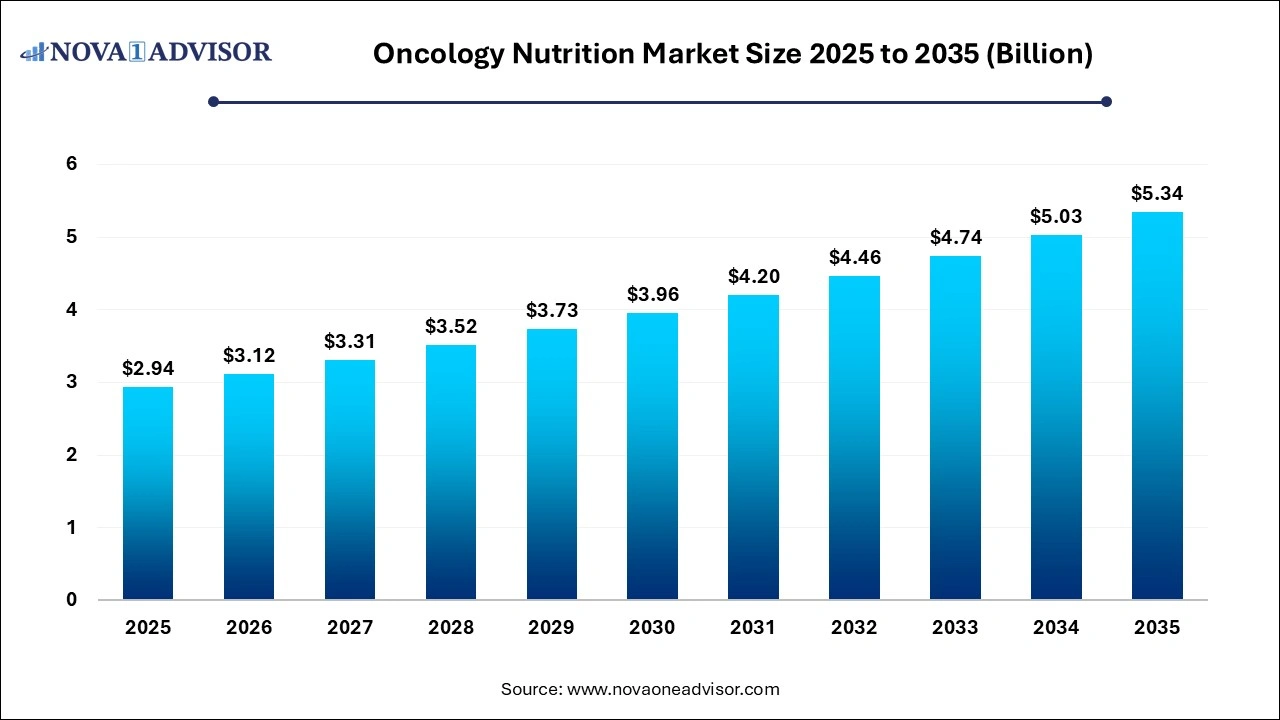
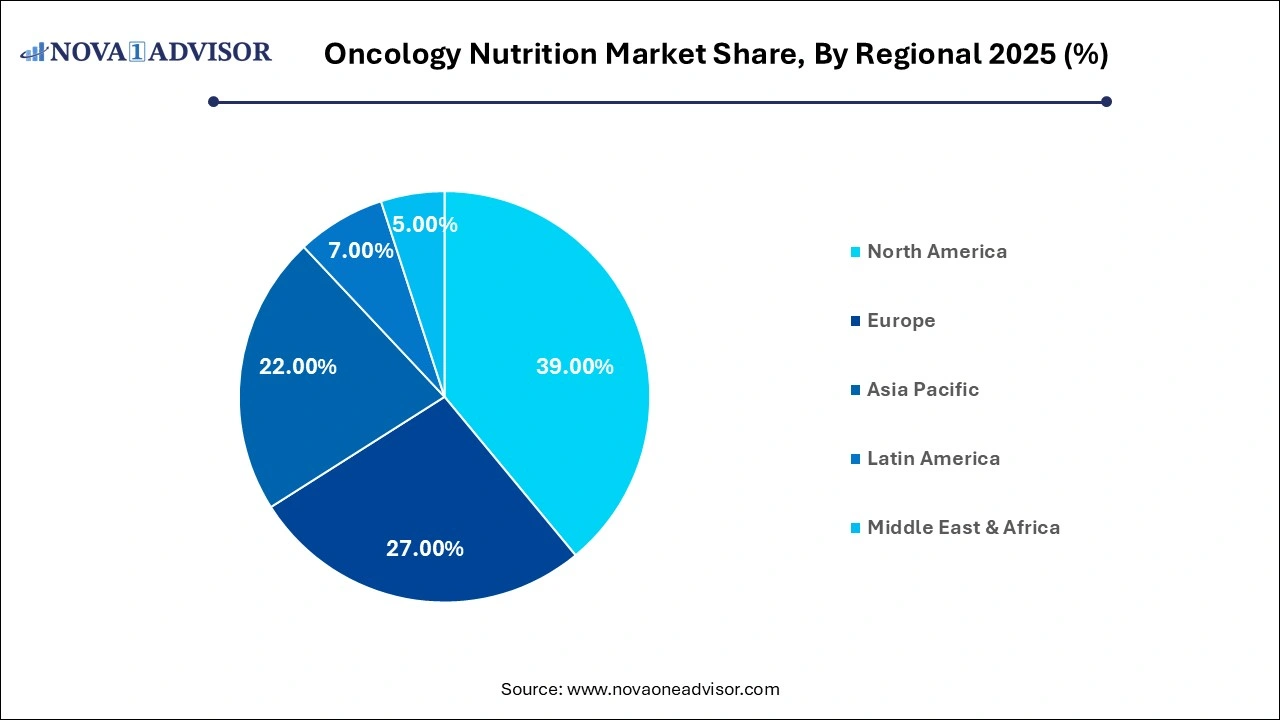
The global oncology nutrition market size was valued at USD 2.94 billion in 2025 and is projected to grow from USD 3.12 billion in 2026 to USD 5.34 billion by 2035, at a CAGR of 6.14% from 2026 to 2035. North America dominated the market, accounting for a revenue share of 39.0% in 2025.
Key Takeaway:
- By cancer type, the head and neck cancer segment dominated the market with the largest share in 2025.
- By cancer type, the lung cancer segment is expected to grow at the fastest CAGR over the forecast period.
- By nutrition type, the enteral formulas segment dominated the market with the largest share in 2025.
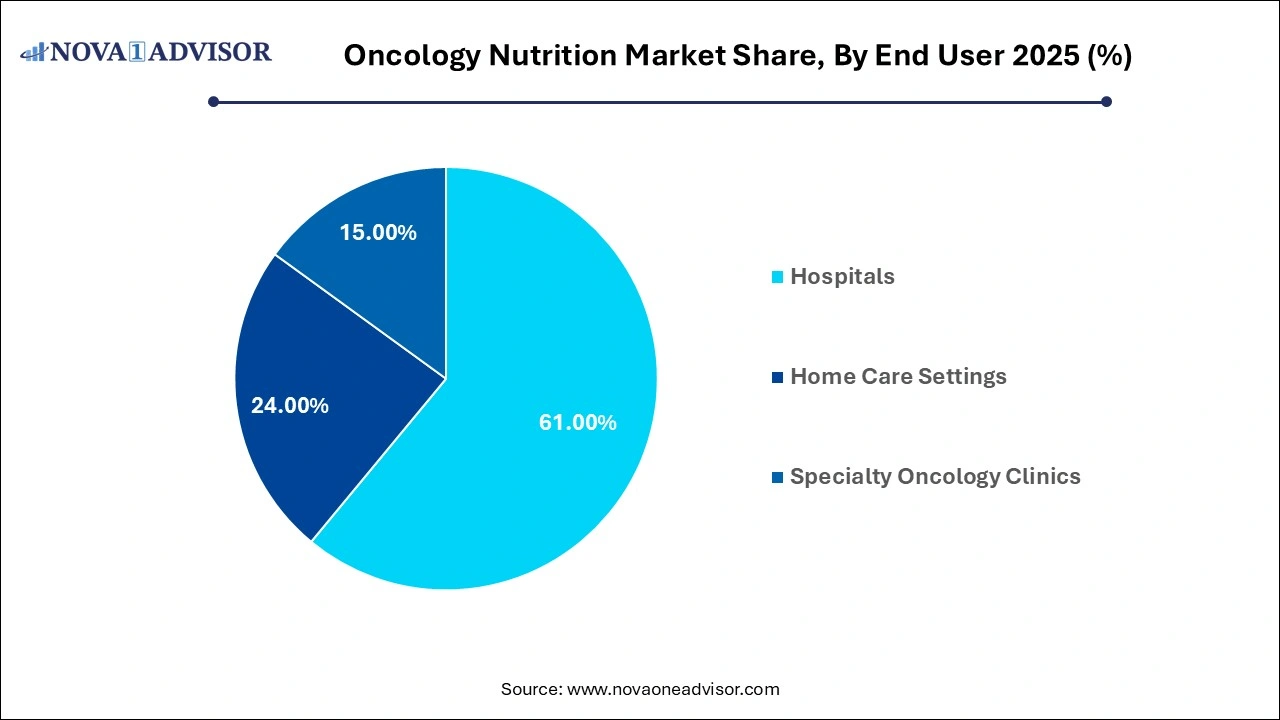
- By end user, the hospitals segment dominated the market with the largest share of 61.0% in 2025.
- By region, North America dominated the market with the largest share of 39.0% in 2025.
Oncology Nutrition Market Overview
The global oncology nutrition market encompasses oral nutritional supplements, enteral and parenteral nutrition, specialized formulas, micronutrient products, and nutrition-management services designed to address the nutritional needs of cancer patients. Nutritional deterioration can occur before, during, or after treatment, contributing to weight loss, muscle depletion, fatigue, reduced treatment tolerance, and poorer quality of life.
Cancer and its treatments can disrupt nutrition through swallowing difficulties, gastrointestinal dysfunction, nausea, vomiting, diarrhea, taste changes, appetite loss, and treatment-related fatigue. As a result, nutritional requirements vary significantly between patients and clinical settings.
The market spans multiple care pathways. Patients able to eat normally may benefit from dietary counseling and oral supplements, while those with severe swallowing or gastrointestinal problems may require enteral or parenteral nutrition. This creates demand across hospitals, oncology clinics, home healthcare, and supportive-care services.
The growing adoption of personalized cancer care is further increasing the importance of nutrition assessment, muscle-mass monitoring, weight trajectory, and treatment tolerance. At the same time, the shift toward home-based oncology care is encouraging demand for convenient, nutrient-dense products and integrated nutrition-management solutions.
Overall, the oncology nutrition market is evolving toward early nutritional screening, personalized interventions, clinically supported products, and continuous nutrition care across hospital-to-home pathways.
Market Outlook
- Market Growth Overview: The global oncology nutrition market is expected to grow significantly between 2025 and 2035, driven by the ongoing innovations in elemental formulas.
- Sustainability Trends: Sustainability trends involve a growing focus on plant-based, organic, and eco-friendly packaging formulations.
- Major Investors: Major investors in the market include Abbott Laboratories (US), Nestlé Health Science (Switzerland), Danone S.A. (France), Fresenius Kabi AG (Germany), and B. Braun Melsungen AG (Germany).
How is AI Impacting The Global Oncology Nutrition Market?
Artificial intelligence (AI) is reshaping the market by assessing complex body composition via routine scans, automating malnutrition detection, and allowing hyper-personalized dietary plans. In addition, sophisticated computational models and mobile applications deliver real-time, highly customized dietary plans designed to accommodate specific oncological diagnoses, individual metabolic requirements, and treatment-related adverse effects.
AI can combine weight trends, laboratory results, treatment schedules, electronic health records, dietary intake, and imaging data to identify patients at risk of malnutrition, sarcopenia, or cachexia. AI-powered analysis of existing CT scans can also help evaluate muscle and fat distribution without requiring additional imaging.
Another promising application is personalized nutrition planning. AI systems could consider cancer type, treatment regimen, swallowing ability, gastrointestinal symptoms, allergies, dietary preferences, and nutritional status to provide recommendations for clinical review.
AI is also supporting remote nutritional monitoring through digital platforms that track weight, food intake, symptoms, and physical activity. Early identification of negative trends could enable clinicians to intervene before severe nutritional deterioration occurs.
Overall, AI could help move oncology nutrition from a reactive approach toward predictive and personalized care, while professional oversight remains essential for clinically sensitive nutritional decisions.
Oncology Nutrition Market Report Scope
| Report Coverage | Details |
| Market Size in 2026 | USD 3.12 Billion |
| Market Size by 2035 | USD 5.34 Billion |
| Growth Rate From 2026 to 2035 | CAGR of 6.14% |
| Base Year | 2025 |
| Forecast Period | 2026 to 2035 |
| Segments Covered | By Cancer Type, By Nutrition Type, By End-User, By Region |
| Market Analysis (Terms Used) | Value (USD Million/Billion) or (Volume/Units) |
| Regional Scope | North America; Europe; Asia Pacific; Central and South America; the Middle East and Africa |
| Key Companies Profiled | Danone S.A., Pfizer Inc., B.Braun Melsungen AG, Fresenius Kabi AG, Grifols, S.A., Baxter International, Inc., Nestlé S.A., Abbott Laboratories, Sichuan Kelun Pharmaceutical Co., Ltd. |
Market Driver: Rising Cancer Burden and Recognition of Cancer-Related Malnutrition
The growing cancer burden and increasing recognition of cancer-related malnutrition are driving demand for specialized nutritional support. Cancer and its treatments can affect appetite, metabolism, swallowing, digestion, and muscle mass, creating different nutritional requirements throughout the treatment journey.
Chemotherapy, radiation therapy, and cancer surgery can produce nausea, taste changes, mucositis, fatigue, and gastrointestinal problems, increasing demand for oral supplements, enteral feeding, parenteral nutrition, and professional dietary support. Greater emphasis on early nutritional screening and individualized care is further strengthening market adoption.
Market Restraint: High Clinical Complexity and Uneven Access
The absence of a universal nutrition strategy remains a key market restraint. Nutritional requirements vary according to cancer type, treatment, disease severity, swallowing ability, gastrointestinal function, comorbidities, and patient preferences. Selecting between oral, enteral, and parenteral nutrition therefore requires professional assessment.
Access to oncology dietitians, nutrition-support teams, specialized products, reimbursement, and home-care services also varies significantly between healthcare systems. Product costs and limited awareness in lower-resource settings can further restrict adoption.
Market Opportunity: Expansion of Personalized and Home-Based Oncology Nutrition
Personalized and home-based nutrition programs present significant growth opportunities. Digital platforms can connect nutritional assessment, specialized products, remote monitoring, and professional follow-up, allowing patients to continue nutritional support beyond the hospital.
AI-enabled tools can analyze weight, dietary intake, symptoms, treatment toxicity, and other patient data to identify deterioration and prompt dietitian intervention. Meanwhile, manufacturers can develop compact, high-protein, high-calorie products with different textures and flavors for patients experiencing appetite or taste changes.
The market is therefore moving beyond individual nutrition products toward integrated oncology nutrition solutions combining assessment, intervention, education, monitoring, and long-term follow-up.
Segmental Insights
By Cancer Type
Why did the head and neck cancer segment dominate the global oncology nutrition market?
The head and neck cancer segment dominated the market with the largest share in 2025. The dominance of the segment can be attributed to the growing dependence on enteral tube feeding and increasing HPV-related cancer prevalence. In addition, specialized elemental and peptide-based enteral formulas are widely used in intensive care settings to maintain intestinal mucosal integrity and support critical physiological functions.
How did the lung cancer segment expected to hold the significantly growing global oncology nutrition market in the coming years?
The lung cancer segment is expected to grow at the fastest CAGR over the forecast period. The growth of the segment can be credited to the growing prevalence of cancer-associated cachexia and surge in metabolic demands from advanced PD-1/PD-L1 immunotherapy combinations. Also, the metabolic alterations and physiological requirements associated with advanced PD-1/PD-L1 checkpoint inhibitor therapy can fuel market growth soon.
By Nutrition Type
Why did the enteral formulas segment dominate the global oncology nutrition market?
The enteral formulas segment dominated the market with the largest share in 2025. The dominance of the segment can be linked to the growing cancer incidence and high rates of malnutrition and cachexia. Hospitals increasingly integrate nutritional evaluations into initial oncology protocols to reduce therapy-disrupting cachexia.
How did the parenteral nutrition segment expected to hold the significantly growing global oncology nutrition market in the coming years?
The parenteral nutrition segment is expected to grow at the fastest CAGR over the forecast period. The growth of the segment can be driven by rapid technological innovations in intravenous lipid emulsions and increasing global cancer incidence. The implementation of early, customized intravenous nutritional support reduces severe therapy-induced malnutrition, hence reducing systemic complications and boosting recovery periods.
By End User
Why did the hospitals segment dominate the global oncology nutrition market?
The hospital segment dominated the market with the largest share in 2025. The dominance of the segment is owing to the growing cancer cases and high malnutrition rates in many patients. Furthermore, hospitals rely extensively on specialized medical nutrition formulations to mitigate severe adverse treatment effects, including dysphagia, emesis, and profound anorexia induced by aggressive oncology therapies such as chemotherapy and radiation.
How did the home care settings segment expected to hold the significantly growing global oncology nutrition market in the coming years?
The home care settings segment is expected to grow at the fastest CAGR over the study period. The growth of the segment is due to an ongoing transition towards home-based and outpatient cancer care treatments. Moreover, to reduce expenses and enhance patient comfort, supportive cancer care and recovery management are increasingly transitioning from hospital settings to the home environment.
By Region
Why did the North American region account for the largest share of the global oncology nutrition market?
North America dominated the market with the largest share in 2025. The dominance of the region can be attributed to the presence of robust reimbursement frameworks and cutting-edge clinical care infrastructure. In addition, high rates of targeted malignancies, including lung, breast, and gastrointestinal cancers, significantly compromise oral nutrition and increase the susceptibility of patients to malnutrition.
- In March 2026, Manulife Canada has entered into a strategic partnership with Osara Health, a specialized cancer treatment support provider, to initiate a pilot program. This initiative delivers customized guidance and resources to qualified group benefits members throughout their oncological treatment and subsequent recovery phases.
U.S. Global Oncology Nutrition Market Trends
The growth of the market in the country can be driven by the growing geriatric population and the rise in prevalence of cachexia-prone cancers. Also, manufacturers are introducing highly palatable, protein-dense immunonutrition supplements designed to enhance patient compliance and reduce therapy-induced weight loss.
Why did the Asia-Pacific region become the fastest-growing global oncology nutrition market during the forecast period?
Asia Pacific is expected to grow at the fastest CAGR over the forecast period. The growth of the region can be credited to the increasing disposable incomes and enhancing healthcare infrastructure in emerging economies such as China and India. Furthermore, regional manufacturers have introduced economically viable and culturally resonant nutritional formulations designed to enhance patient tolerance and treatment adherence.
China Global Oncology Nutrition Market Trends
The market in the country is growing due to the growing household disposable incomes and ongoing transition towards supportive care. Moreover, hospitals and oncologists are increasingly integrating specialized enteral and oral nutritional formulas into early treatment protocols to reduce the adverse side effects of chemotherapy and radiotherapy.
Key Players in the Global Oncology Nutrition Market
- Abbott Laboratories: It offers high-calorie and high-protein oral nutritional supplements like Ensure and specialized clinical formulas designed to manage weight loss and treatment side effects during therapy.
- Nestlé Health Science: It provides targeted medical nutrition brands such as Boost and Resource Support Plus aimed at maintaining lean body mass and supporting immune health in oncology patients.
- Fresenius Kabi: It supplies extensive clinical nutrition options, including enteral and parenteral products like Supportan and Fresubin, tailored for high-metabolic cancer cachexia.
Recent Developments
- In August 2026, Geri Care, a prominent pioneer in integrated elder care in India, has officially announced the launch of its dedicated geriatric oncology center. This specialized facility is the first of its kind in the nation to focus exclusively on the oncology needs of senior citizens. Headquartered at the Adambakkam facility.
Segments Covered in the Report
This report forecasts revenue growth at country levels and provides an analysis of the latest industry trends in each of the sub-segments from 2021 to 2035. For this study, Nova one advisor, Inc. has oncology nutrition market.
By Cancer Type
- Head & Neck Cancer
- Stomach & Gastrointestinal Cancer
- Blood Cancer
- Breast Cancer
- Lung Cancer
- Other Cancers
By Nutrition Type
- Enteral Nutrition
- Parenteral Nutrition
By End User
- Hospitals
- Home Care Settings
- Specialty Oncology Clinics
By Region
- North America
- Europe
- Asia-Pacific
- Latin America
- Middle East & Africa (MEA)
FAQ's

Proceed to Buy
Instant PDF delivery on confirmation

Oncology Nutrition Market Size to Hit USD 5.34 Billion by 2035
 Request Customization
 Download Sample

Get a Sample of this Report
Oncology Nutrition Market